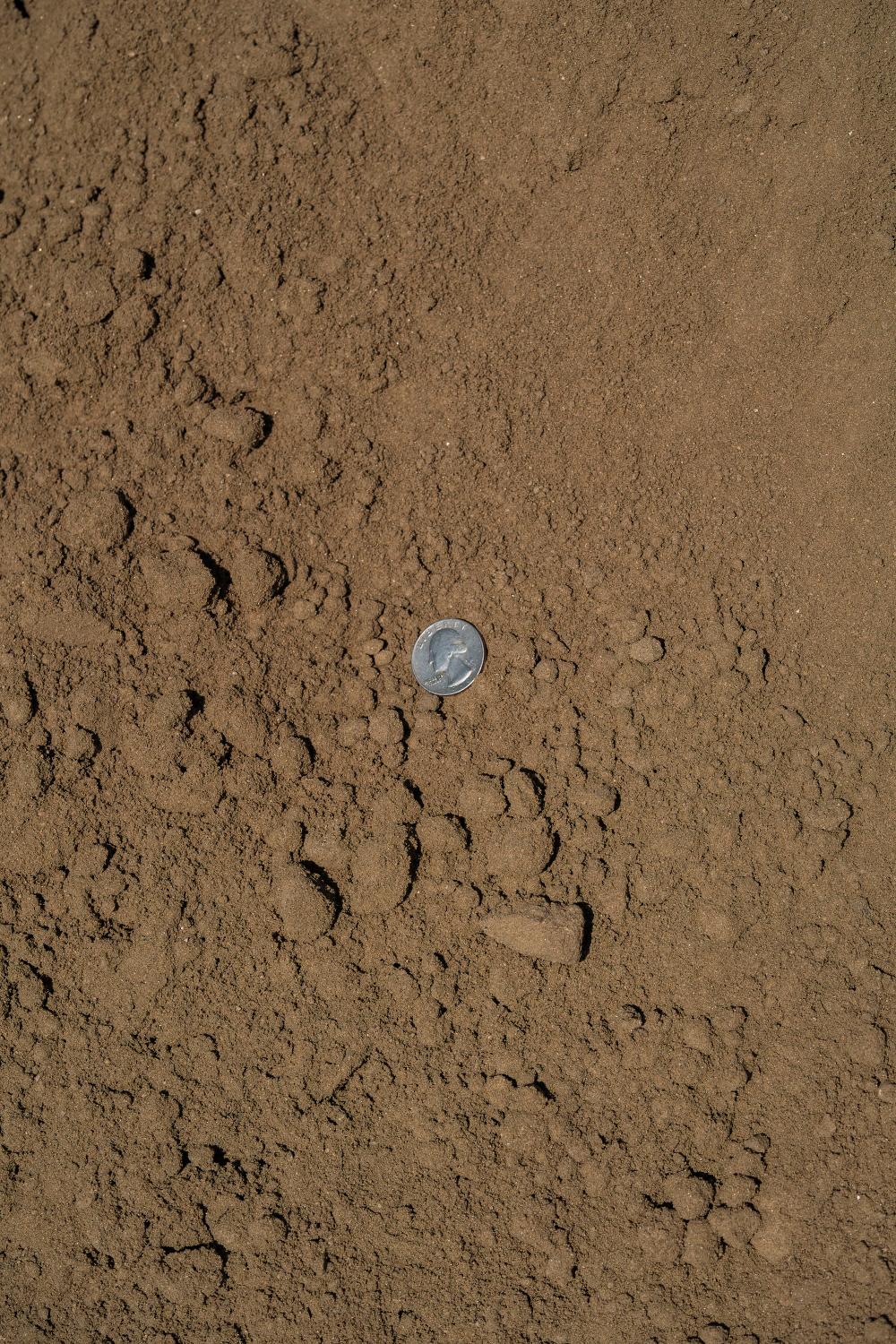
Top Soil
90 sqft per yard @ 2″ Depth
Closed
Hours:
Mon-Sat: 6:30 AM - 4:00 PM
Sunday: Closed
Why Top Soil? Use Cases and Performance
Top soil is the screened, plantable soil layer you add when the ground you already have will not grow what you want it to grow. It is the single most-requested bulk material at our Fresno yard in spring, and it is also the one customers most often order incorrectly. "Top soil," "fill dirt," and "garden mix" get used interchangeably in conversation, but they are three different products that solve three different problems.
Here is the distinction in one line each. Top soil is soil you plant into. Fill dirt is material you build grade with and compact, and you do not plant into it. Amendments like black humus and red humus are organic material you mix into soil to improve it, not something you install as a standing layer. Ordering fill dirt for a lawn or humus for a grade change is the most expensive mistake in this category, because the fix is removing what you installed.
What people use top soil for
- New lawn installation: building a plantable layer over compacted or poor native soil before seed or sod.
- Raised beds and vegetable gardens: a base soil volume, typically blended with organic amendment.
- Leveling and repairing lawns: filling low spots, settling trenches, and correcting drainage puddles in an existing lawn.
- Planting beds and borders: building up bed depth so root systems have somewhere to go besides hardpan.
- Top-dressing: a thin layer over an existing lawn to improve the surface and level minor undulations.
- Tree and shrub planting: backfill for planting holes in heavy native ground, usually blended with the native soil rather than used straight.
- Erosion repair and re-vegetation: restoring a plantable surface on bare, scoured ground.
Why Central Valley yards need it so often
Two local realities drive most top soil orders in Fresno and Clovis. The first is clay: much of the area's native soil has a heavy clay fraction that compacts hard, drains slowly, and cracks when it dries. The second is construction practice. On a lot of tract builds, the original topsoil layer was stripped or buried during grading, and the finish surface homeowners inherit is essentially subsoil with a thin cosmetic layer over it. Neither of those grows a good lawn or a productive vegetable bed on its own, and no amount of fertilizer fixes a structural soil problem.
Coverage math
One cubic yard covers roughly 160 sq ft at 2" deep, about 108 sq ft at 3", and about 80 sq ft at 4". Our calculators will do the arithmetic for your exact dimensions. Bring the numbers when you call 559-233-6603.
Buying top soil in Fresno
We sell top soil by the yard from our yard at 3562 South Elm Avenue in Fresno, Monday through Saturday, 6:30 AM to 4:00 PM. Load it yourself, have us load your truck or trailer, rent a dump trailer for a self-haul, or have it delivered by dump truck. Soil is heavy, and wet soil is heavier. Call 559-233-6603 before you drive out with a half-ton pickup and a plan to haul three yards.
Top Soil: Guidance for Your Situation
Pick the description that fits you best. Specs, steps, and pricing questions differ for a weekend project versus a bid or a compliance inspection.
For homeowners and DIY gardeners
Using Top Soil in Your Own Yard
Most homeowner top soil projects fall into four buckets: putting in a lawn, fixing a lawn, building beds, or leveling ground. The depth and the method are different for each, and getting them right matters more than the brand of seed or the fertilizer schedule you use afterward.
How deep should the top soil layer be?
| Project | Depth of top soil | Notes |
|---|---|---|
| New lawn from seed or sod | 4"–6" | Over loosened, not compacted, subsoil. This is the depth that grows roots deep enough to survive a Fresno August. |
| Top-dressing an existing lawn | 1/4"–1/2" per pass | Thin. A heavy layer smothers turf. Repeat seasonally instead. |
| Leveling low spots in a lawn | Up to 1" per application | Multiple light applications let grass grow through instead of dying under it. |
| Vegetable garden / raised beds | 8"–12" | Blend with organic amendment; most vegetables want depth and structure. |
| Planting beds and borders | 6"–8" | Deeper for shrubs and perennials than for annual color. |
| Filling a settled trench | To grade, in lifts | Water each lift to settle it or you will be back next season. |
Step-by-step: installing a new lawn area
- Kill and clear existing vegetation. Whatever is there now will come back through your new soil if you bury it alive.
- Break up the native surface. Rototill or rip the top few inches. Laying fresh soil on a hard, smooth, compacted surface creates a distinct interface that roots will not cross and water will not drain through.
- Correct the grade before you add soil. Slope away from the house at roughly a quarter inch per foot minimum. Fixing grade later means moving all your new soil again.
- Spread top soil to depth. For a new lawn, 4"–6" after settling. Rake it out in passes rather than trying to level a single deep dump.
- Blend the interface. Lightly work the bottom of the new layer into the loosened native soil so the two profiles connect.
- Amend if you are planting heavy feeders. Turn in organic amendment for vegetables and beds; a lawn generally needs less than people assume.
- Settle it with water, not a compactor. Water the area, let it settle a day, then re-level the dips that show up. Compacting planting soil defeats the point of installing it.
- Seed or lay sod, then keep it wet. In Fresno's heat, establishment irrigation is the whole game for the first few weeks.
Working with Fresno clay
If your yard puddles for hours after irrigation, cracks into plates in August, or turns into a brick you cannot get a shovel into, you have the classic local clay profile. Adding a layer of top soil on top of it helps, but the layer alone is not the whole fix, since water still has to get through the clay eventually. The durable approach is to loosen the clay before you add soil, blend organic amendment into the transition zone so there is no abrupt boundary, and give surface water a designed place to go. For persistent wet spots, raising the planting area rather than fighting the drainage is usually the cheaper and more reliable answer.
Do not use fill dirt for planting
Fill dirt is for building and compacting grade. It is not screened for planting and it will disappoint you as a lawn base. If your project is "raise this area two feet and then plant on it," the right order is fill dirt for the bulk of the lift, top soil for the plantable layer on top.
Blending top soil with amendments
- Vegetable beds: a common home blend is roughly two parts top soil to one part organic amendment such as black humus.
- New lawn: mostly top soil with a modest amendment fraction; over-rich soil grows fast, shallow-rooted grass.
- Shrubs and trees: blend top soil with the excavated native soil rather than backfilling a hole with pure imported soil. An overly rich pocket in heavy clay behaves like a bathtub.
- Container and potting use: neither top soil nor humus is a container mix. Use potting soil mix for pots.
How much will it cost and how do I get it home?
Top soil is priced by the yard and we quote it live. Call 559-233-6603. On logistics, a cubic yard of soil is heavy, and moisture content adds to that considerably in spring. One yard is a reasonable load for most pickups; beyond that, either take delivery or rent a dump trailer. Also plan the wheelbarrow time honestly: a yard of soil is a real afternoon of moving material if the drop point is not next to the work area.
Best time of year to do this in Fresno
Fall and early spring are the sweet spots. Fall installations get established through the mild, wetter months and are ready to handle their first summer. Early spring works well if you can get irrigation running before the heat arrives. Mid-summer installs are possible but unforgiving: bare soil dries fast, seed struggles, and sod needs near-constant water to take. If you are stuck installing in July or August, sod is more likely to succeed than seed.
For landscapers, builders, and property managers
Bulk Soil Ordering, Placement, and Job-Site Logistics
Top soil is a volume business with a scheduling problem attached. It is heavy, it is weather-sensitive, and everybody wants it on the same three weeks in spring. Calling ahead is worth more on this product than on any aggregate we sell.
Ordering and quantities
| Depth placed | Coverage per cubic yard | Typical application |
|---|---|---|
| 1" | ~324 sq ft | Top-dressing an existing turf area |
| 2" | ~160 sq ft | Light lawn repair, bed refresh |
| 3" | ~108 sq ft | Minimum new-turf section on prepared subgrade |
| 4" | ~80 sq ft | Standard new lawn |
| 6" | ~54 sq ft | Premium turf section, planting beds |
| 12" | ~27 sq ft | Raised beds, deep planting pockets |
Placement notes that affect callbacks
- Scarify the subgrade. Placing soil on a smooth, sealed, machine-compacted surface creates a perched interface, where water sits at the boundary and roots stop there. Rip or till the surface before you place.
- Do not place on saturated clay. Working wet Valley clay smears and seals it, which turns a drainage problem into a permanent one. Wait for it to dry to workable.
- Place in lifts on deep sections. Deep single lifts settle unevenly and produce the low spots you get called back for.
- Settle with water, not vibration. Planting soil should not be plate-compacted. Where a compacted section is genuinely required beneath the planting layer, that layer should be fill dirt or base rock, not top soil.
- Protect finish grade from traffic. Wheel ruts through a finished soil section are the second most common callback after settlement.
Product selection by scope
| Scope | Specify | Why |
|---|---|---|
| Grade raise, pad build, void fill | Fill dirt | Compactable structural material, not screened for planting |
| Turf and planting layer | Top soil | Screened, plantable, holds root structure |
| Soil improvement in existing beds | Black humus / red humus | Organic amendment tilled in, not installed as a standing layer |
| Surface mulch over finished beds | Walk-on bark or deco bark | Moisture retention and weed suppression on top of the soil |
Delivery, staging, and self-haul
- Bulk delivery: dump truck delivery across Fresno, Clovis, and the surrounding Valley, including staged multi-load drops on larger sites.
- Yard loading: we load contractor trucks and trailers at 3562 South Elm Avenue, Monday through Saturday 6:30 AM–4:00 PM.
- Self-haul rentals: dump trailers and trucks when your fleet is committed elsewhere.
- Combined loads: soil plus amendment plus bark on the same run is standard. Tell us the placement sequence and we will match the delivery order.
- Spring lead times: March through May is peak. Order ahead rather than day-of when you are holding a crew.
- Haul-off: if the job generates spoils, ask about the hauling side of our dump truck service so you are not paying two vendors.
Bulk pricing and accounts
We quote bulk soil and repeat-account pricing directly at 559-233-6603 or through our contact page. Volume, haul distance, and load count all move the number, and material pricing shifts through the season, so we price it live instead of publishing a rate that would be wrong by the time you read it. For production landscape, property management turnovers, and recurring HOA maintenance, ask about standing pricing. Our contractor page covers how accounts work.
Top Soil vs. Fill Dirt vs. Humus vs. Potting Mix
This is the comparison that saves the most money, because every one of these products is sold by the yard and looks vaguely like dirt in the back of a truck. They are not substitutes for each other.
| Product | What it is | Use it for | Do not use it for |
|---|---|---|---|
| Top Soil | Screened, plantable soil | Lawns, beds, leveling, planting layers | Structural fill or compacted grade |
| Fill Dirt | Unscreened compactable earth | Raising grade, filling voids, building pads | Anything you intend to plant into |
| Black Humus | Organic soil amendment | Tilling into existing soil, enriching beds | A standalone soil layer or grade material |
| Red Humus | Organic amendment with reddish tone | Amending beds where appearance matters | Structural or deep-fill applications |
| Potting Soil Mix | Light container medium | Pots, planters, containers | In-ground volume, since it is too light and too expensive by the yard |
Top soil vs. bagged garden soil from a big-box store
For a couple of containers, bags are fine. For anything measured in yards, bags are dramatically more expensive per unit volume and take an absurd amount of handling. A single cubic yard is roughly the equivalent of a truckload of bags to open, empty, and dispose of. The break-even point for most homeowners arrives well before one yard. If your project covers more than a small bed, bulk is the cheaper and faster path even after a delivery fee.
Top soil vs. amending what you already have
Not every project needs imported soil. If your existing soil is structurally reasonable and simply tired, tilling in an organic amendment is cheaper and often better than importing volume. Import top soil when you need to add height, when the existing surface is subsoil or construction spoil, or when a compacted layer means there is functionally no plantable profile to amend. Amend in place when the soil is workable and the problem is fertility or organic content rather than depth.
Top Soil in Central Valley Conditions
Fresno's growing conditions are specific enough that generic soil advice written for a mild, rainy climate will steer you wrong here. Summers run long, extremely hot, and dry. The wet season is short and concentrated. Native soils lean heavy with clay, many local yards run alkaline, and irrigation water leaves mineral deposits behind. Each of those changes how you should install and manage a soil layer.
Heat and root depth
The most common reason a new lawn struggles through its first Fresno summer is that the soil layer was too shallow. A thin plantable layer over a hard interface produces shallow roots, and shallow roots cannot survive weeks of triple-digit heat no matter how often you water. They just dry out between cycles. Depth is a heat-tolerance decision here, not a luxury. It is also the reason we push scarifying the subgrade: roots that can continue down past the imported layer are dramatically more resilient in August.
Clay, drainage, and the perched-water problem
When you place a lighter, more porous soil directly on top of dense clay, water moving down through the new layer stalls at the boundary rather than continuing into the clay. That produces a saturated zone right in the root area: plants drown in the wet season and bake in the dry one. Two things prevent it. Break up the clay surface before placing, and blend the interface so there is a gradient rather than a hard line between the two materials. On persistently wet sites, raising the bed and giving surface water a route out beats trying to force infiltration.
Water conservation
Valley water restrictions make soil quality a water-efficiency issue. Soil with good organic content and adequate depth holds moisture between irrigation cycles, which means fewer cycles and less runoff. Pairing a proper soil layer with a surface mulch, such as walk-on bark on paths and beds or deco bark where appearance matters, meaningfully reduces evaporation off the surface. Many customers doing lawn conversions use top soil for the new planting areas and a rock ground cover like crush granite for the areas coming out of turf entirely.
Alkalinity and mineral buildup
Local soils and irrigation water tend to run alkaline, and over years of irrigation, mineral salts accumulate in the upper soil profile, particularly in beds with drip irrigation and limited deep flushing. Organic amendment helps buffer this, deep occasional irrigation flushes salts down past the root zone better than frequent shallow watering, and picking plants suited to alkaline conditions removes the problem entirely. If a specific planting matters to you, a soil test through the local UC Cooperative Extension is inexpensive and takes the guesswork out.
Seasonal timing
| Season | Suitability | Notes |
|---|---|---|
| Fall (Sep–Nov) | Best | Cooling temperatures, coming rain, long establishment window before heat. |
| Winter (Dec–Feb) | Workable between storms | Do not work saturated clay; wait for the surface to dry to workable. |
| Spring (Mar–May) | Very good, and busiest | Order ahead; this is peak demand at the yard. |
| Summer (Jun–Aug) | Possible, unforgiving | Sod over seed, irrigation running before install, expect higher water use. |
Delivery area
We deliver bulk top soil throughout Fresno, Clovis, Sanger, Selma, Kingsburg, Madera, and surrounding communities. Call 559-233-6603 to confirm delivery to your address or to schedule a yard pickup.
Top Soil: Frequently Asked Questions
Have questions? We've got answers. If you don't see your question below, give us a call at (559) 233-6603.