Black Humus
90 sqft per yard @ 2″ Depth
Closed
Hours:
Mon-Sat: 6:30 AM - 4:00 PM
Sunday: Closed
Why Black Humus? Use Cases and Performance
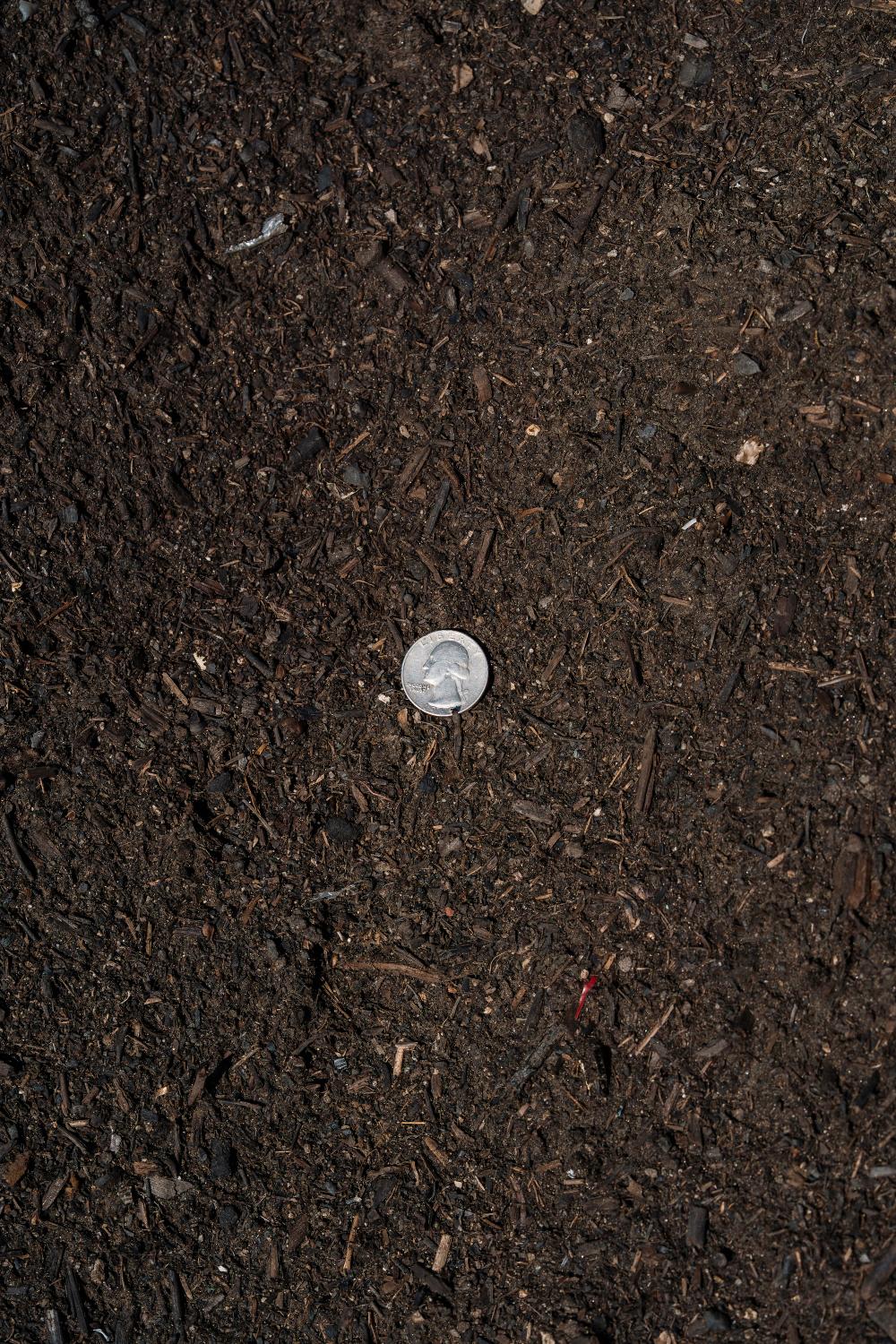
Black humus is decomposed organic material, dark, fine-textured, and rich in the kind of organic content that Fresno's native clay and hardpan soils are almost always missing. It is not a soil, and it is not a mulch. It is an amendment, meaning its job is to be tilled or mixed into soil to change how that soil holds water, drains, and feeds roots. Customers sometimes ask if it can be spread and planted into like top soil. It can be laid over a bed, but the value comes from working it into the ground it sits on, not from leaving it as a standing layer.
The color and texture tell you what you are getting. Black humus is dark from organic carbon content, and it is fine enough to blend evenly into existing soil without leaving clumps or chunks behind. That fineness is also why it is not a substitute for top soil or fill dirt. Those two build volume and grade. Humus improves the soil that is already there or that you have already imported.
What people use black humus for
- Amending clay soil before planting a lawn, bed, or garden, breaking up the tight structure that keeps roots shallow and water pooled.
- Building vegetable garden and raised bed soil, usually blended with top soil rather than used alone.
- Refreshing tired planting beds around shrubs, roses, and perennials that have been in the ground for years and have depleted the organic content near the root zone.
- Improving water retention in sandy or fast-draining spots where irrigation runs straight through without the plant getting a chance at it.
- Top-dressing lawns in thin layers to add organic matter without smothering existing turf.
- Backfill blending for tree and shrub planting holes dug into heavy native clay.
Why Central Valley soil needs this more than most
Fresno and Clovis sit on soil that runs heavy with clay in a lot of neighborhoods and light on organic matter almost everywhere. Clay by itself compacts hard, drains slowly, and cracks into plates once it dries out in the summer heat. Add decades of irrigation with mineral-laden well or district water and a climate that gives organic matter very little chance to build up naturally, and you get a soil profile that fights against the plants people are trying to grow in it. Working humus into that structure loosens tight clay, gives sandy soil something to hold onto, and restores a fraction of the organic content that native ground here rarely accumulates on its own.
Coverage math
One cubic yard covers roughly 160 sq ft at 2" deep, about 108 sq ft at 3", and about 80 sq ft at 4" before it gets worked into the soil. Most amendment jobs use a fraction of that depth, since humus is usually blended into the top several inches rather than laid on as a full course. Run your numbers through our calculators, or call 559-233-6603 and we will help you work out a blend ratio and quantity.
Buying black humus in Fresno
We sell black humus by the yard out of our yard at 3562 South Elm Avenue in Fresno, Monday through Saturday, 6:30 AM to 4:00 PM. You can load it yourself, we can load your truck or trailer, you can rent a dump trailer and haul it yourself, or we can deliver it by dump truck. It is priced by the yard and we quote it live, since material and fuel costs shift through the season. Call 559-233-6603 before you plan a load size around a guess.
Black Humus: Guidance for Your Situation
Pick the description that fits you best. Specs, steps, and pricing questions differ for a weekend project versus a bid or a compliance inspection.
For homeowners, gardeners, and DIY landscapers
Amending Your Own Soil With Black Humus
Most homeowner humus projects come down to one question: how much do I mix into what I already have. The answer depends on what you are planting and how bad the existing soil is, but there are working ratios that hold up across most Fresno yards.
How much humus should I blend in?
| Project | Typical blend | Notes |
|---|---|---|
| Vegetable beds and raised beds | 1 part humus to 2 parts top soil | Heavy feeders reward a richer mix; till to a full 8"-12" depth. |
| New lawn over clay | 1 part humus to 3 to 4 parts top soil | Too rich a mix under turf grows fast, shallow roots that struggle in August heat. |
| Existing planting beds, refresh | 1"-2" worked into the top 4"-6" | A seasonal refresh rather than a one-time fix. |
| Tree and shrub planting holes | Small fraction blended with native soil | Do not backfill a hole in clay with pure rich amendment. It creates a bathtub that holds water against the roots. |
| Sandy, fast-draining soil | 1 part humus to 2 to 3 parts native soil | Improves water and nutrient retention rather than structure. |
Step-by-step: amending an existing bed or lawn area
- Clear the area. Remove weeds, old mulch, and any debris sitting on top of the soil you are about to work.
- Loosen the existing soil. Fork or till the top 6"-8" so the amendment has somewhere to go besides the surface.
- Spread the humus in an even layer over the loosened area, using the ratio for your project from the table above.
- Till or fork it in thoroughly. The goal is an even blend through the working depth, not a dark layer sitting on top of unchanged clay.
- Rake the surface level and water it in. Watering settles the blend and helps you spot low areas before you plant.
- Plant or seed once the bed has settled, typically a day or two after watering.
Working with Fresno clay specifically
If your soil puddles for hours after you irrigate and then cracks into plates a week later, humus alone will not fix it in one pass. Clay structure improves gradually, over repeated seasons of adding organic matter, not from a single application. The first year's blend loosens the surface enough to plant into. Repeating the process each fall or spring keeps building structure deeper into the profile. If you need to raise a bed or correct grade at the same time, do that with top soil or fill dirt and use humus for the amendment step, not the bulk.
Do not use humus as a standalone soil layer
Humus is fine, dark, and organic, which makes it tempting to just spread and plant into. Left as a standing layer on its own, it drains too fast, decomposes further, and settles unevenly. Blend it into the soil beneath it or into top soil before planting.
Humus vs. compost from your own yard
Home compost and bulk humus solve overlapping problems, but volume is the deciding factor. A backyard compost bin produces a useful but small amount over months. A single bed refresh or a new lawn's worth of amendment needs cubic yards, which is a different scale entirely. Many homeowners use both: home compost for ongoing topdressing in small quantities, bulk humus for the initial heavy lift when a bed or lawn area is being built or renovated.
Cost and getting it home
Black humus is priced by the yard and we quote it live, call 559-233-6603. It is lighter than compacted fill dirt but still heavy once damp, so a half yard to one yard is a reasonable load for most pickups. Beyond that, either take delivery or rent a dump trailer for the day.
Best time of year to amend in Fresno
Fall is the strongest window, since amended soil has the mild, wetter months to settle and integrate before summer heat arrives. Late winter and early spring work as a second option ahead of spring planting. Amending in the middle of a Fresno summer is harder to manage, since the soil dries out fast and newly worked ground needs consistent water to keep from crusting over before roots establish.
For landscapers, contractors, and property managers
Bulk Amendment Specs, Blending, and Job-Site Logistics
Humus moves in volume on renovation and turf-conversion jobs, where the spec usually calls for a blended soil profile rather than raw amendment alone. The logistics differ from aggregate in one important way: blending happens either at the yard on request or on site with your own equipment, and getting that sequencing right on the schedule matters more than the material itself.
Working specs
| Property | Working value / behavior |
|---|---|
| Material type | Decomposed organic amendment, fine texture, dark color |
| Sold by | The yard (bulk); loaded at our Fresno yard or delivered |
| Function | Soil amendment, tilled or blended in, not a standing structural layer |
| Typical blend with top soil | 1 part humus to 2 to 4 parts top soil depending on planting type |
| Coverage | Calculated at 2" depth for reference, see our calculators, most amendment jobs use a fraction of that depth worked into existing soil |
Blending and placement notes
- Blend before or during placement, not after. Dumping humus in one pile and top soil in another and expecting a crew to hand-mix on a deadline produces an uneven bed. Blend at the yard when volumes allow, or spread both materials in alternating thin lifts and till together.
- Till to full working depth. A thin surface blend over unchanged clay looks right on delivery day and performs like unchanged clay by August.
- Match richness to plant type. Turf areas want a lighter amendment fraction than vegetable production beds or annual color rotations, which can run richer.
- Sequence around irrigation. Amended beds need consistent water to establish; coordinate the timing so irrigation is live before or immediately after planting, not days later.
- Keep equipment off wet amended soil. Compacting a freshly blended bed with a loaded wheelbarrow or skid steer defeats the structural improvement you just built in.
Product selection by scope
| Scope | Specify | Why |
|---|---|---|
| Grade raise or structural fill | Fill dirt | Compactable, not screened or amended for planting |
| Plantable layer, lawns and beds | Top soil | Screened base soil, blended with humus for planting |
| Amending existing or imported soil | Black humus or red humus | Organic content, tilled in rather than laid as a layer |
| Container and nursery stock production | Potting soil mix | Formulated for containers, not for in-ground volume |
| Surface mulch over finished beds | Walk-on bark or deco bark | Weed suppression and moisture retention on top of amended soil |
Delivery, staging, and self-haul
- Bulk delivery: dump truck delivery across Fresno, Clovis, and the surrounding Valley, including staged loads on turf conversion or renovation projects.
- Yard loading: we load contractor trucks and trailers at 3562 South Elm Avenue, Mon-Sat 6:30 AM-4:00 PM.
- Self-haul: dump trailer and truck rentals when your fleet is committed elsewhere.
- Combined loads: humus plus top soil plus bark on one delivery run is common. Tell us the placement sequence so we can load the truck in the order you will use it.
- Fall and spring lead times: renovation season books up. Order ahead of your crew's schedule rather than day-of.
Bulk pricing and accounts
We quote bulk and repeat-account pricing directly at 559-233-6603 or through our contact page. Volume, haul distance, and load count all affect the number, and organic material sourcing costs shift through the year, so we do not publish a rate that would be stale by the time you call. Ask about standing pricing for recurring turf renovation, HOA turnover work, and production landscape accounts.
For serious gardeners, growers, and small-scale production
Black Humus for Vegetable Production and Intensive Planting
For anyone growing food or maintaining beds that get replanted every season, organic content is the resource that runs out fastest and matters most. Fresno's heat accelerates the breakdown of organic matter in the soil, which means beds that were amended two or three seasons ago are often back to running lean by the time you notice yields dropping.
Building a production bed from scratch
New raised beds and in-ground vegetable rows do best with a blended profile from the start rather than raw native soil with humus tilled into the top few inches. A common working mix is roughly one part black humus to two parts top soil, worked to a full 8" to 12" depth. Deeper beds intended for root vegetables or heavy feeders can run richer. The goal is even distribution through the working depth, since a rich surface layer over unchanged subsoil pushes roots sideways instead of down.
Maintaining fertility season over season
- Between plantings, work a thin layer of humus, roughly half an inch to an inch, into beds before the next crop cycle rather than waiting until yields drop to notice depletion.
- Heavy feeders like tomatoes, squash, and corn draw down organic matter faster than root crops and light greens, and benefit from a richer refresh each season.
- Rotate amendment timing with your planting calendar so beds are worked and watered in ahead of transplant or seed dates, not the same week.
- In raised beds, settling over a season is normal. Expect to top up volume with a top soil and humus blend rather than humus alone, since the bed loses total volume as organic matter breaks down.
Water retention and Fresno heat
Organic matter holds moisture that mineral soil and sandy soil release quickly, which matters directly during a Fresno summer where beds can dry out within a day of irrigation. Beds with a healthy organic fraction hold water longer between waterings and buffer plants against the stress of 100 degree afternoons better than lean, mineral-heavy soil. This does not replace a working irrigation schedule, but it extends the margin for error when a watering day gets missed.
Do not overdo the richness under young transplants
Very rich, freshly amended soil can burn tender transplant roots if the blend is uneven or too concentrated near the root ball. Mix thoroughly and let a fresh blend settle and water through once before planting directly into it.
Ordering for a growing operation
Market gardens, school gardens, and community garden plots typically order humus and top soil together on the same delivery, since most beds need both the bulk volume and the amendment fraction at once. Tell us your bed dimensions and planned blend ratio when you call 559-233-6603 and we can help size the order instead of you guessing and running short mid-project.
Black Humus vs. Top Soil vs. Red Humus vs. Potting Mix
Everything in this comparison looks like dark, crumbly organic material in the back of a truck, and customers regularly order the wrong one because of that. They are not interchangeable, and using the wrong product usually means redoing the work.
| Product | What it is | Use it for | Do not use it for |
|---|---|---|---|
| Black Humus | Decomposed organic amendment, dark and fine | Tilling into soil to improve structure and organic content | A standalone soil layer or grade material |
| Red Humus | Organic amendment with a reddish tone | Amending beds where a warmer surface tone matters visually | Structural fill or deep grade changes |
| Top Soil | Screened, plantable soil | Lawns, beds, leveling, the base layer you plant into | Amending soil that already has adequate volume, since you would be replacing rather than improving it |
| Fill Dirt | Unscreened compactable earth | Raising grade, filling voids, building pads | Anything you intend to plant into or amend |
| Potting Soil Mix | Light, formulated container medium | Pots, planters, containers | In-ground volume or bed amendment, since it is too light and expensive by the yard for that use |
Black humus vs. red humus
The functional difference between the two is small. Both are organic amendments meant to be worked into soil, and both improve structure and water retention in a similar way. The practical difference customers care about is color. Black humus reads as a neutral dark tone that disappears once it is tilled in and covered by plants. Red humus carries a warmer, reddish cast that shows on the surface longer, which matters if you are top-dressing a visible bed rather than tilling everything under before it is seen.
Black humus vs. top soil, which one do I actually need
This is the single most common mix-up in this category. If your project is building a new plantable layer from nothing, such as a new lawn over bare or graded ground, you need top soil, likely blended with humus. If your project is improving soil that already exists, tired beds, compacted clay, a garden that has been producing for years, you need humus tilled into what is already there. Ordering straight humus to fill a large bare area wastes money on a rich amendment where a base soil volume would have done the job for less. Ordering straight top soil to fix a fertility problem in beds that already have enough volume misses the actual problem.
Bulk humus vs. bagged soil amendment from a retail store
Bags make sense for a couple of containers or a very small bed. For anything measured in cubic yards, which is most beds larger than a few square feet at real depth, bagged amendment costs dramatically more per unit volume and takes far more handling to open, empty, and dispose of the packaging. A single cubic yard in bulk is roughly a truckload of bags. Bulk wins on cost and effort well before a project reaches a full yard.
Black Humus in Central Valley Conditions
Fresno and Clovis growing conditions push soil amendment from a nice-to-have into something closer to a requirement. Long, dry, extremely hot summers, a short and concentrated wet season, native clay and hardpan in a large share of neighborhoods, and irrigation water that leaves mineral residue behind all work against unamended soil at once.
Clay and hardpan
A large share of Central Valley residential lots sit on clay soil that compacts tight, drains slowly, and cracks into hard plates when it dries. Some lots, particularly older developments and areas near natural hardpan layers, have a cemented subsurface layer that water and roots barely penetrate at all. Humus does not dissolve hardpan, and no amendment does that on its own. What it does is improve the structure of the workable soil above it, giving roots and water somewhere better to go in the depth that is actually reachable. On lots with severe hardpan, mechanical breakup of the hardpan layer combined with amendment is the realistic combination, not amendment alone.
Summer heat and organic matter breakdown
Fresno regularly sees extended stretches above 100 degrees Fahrenheit in summer, and heat accelerates the natural breakdown of organic matter in soil. That means beds amended a couple of years ago have already lost a meaningful share of the organic content that was added, faster than the same bed would deplete in a milder climate. Reamending on a seasonal basis, rather than treating a single application as permanent, keeps pace with how quickly Valley heat consumes organic material.
Winter rain and the wet season
The Central Valley's rain arrives in a short, concentrated window rather than spread evenly through the year. Well-amended soil handles that window better than tight clay, since improved structure lets water infiltrate instead of sheeting off or pooling. Unamended clay beds are the ones that show standing water for a day or two after a storm, then crack open again a few weeks into the dry stretch that follows.
Tule fog and mild-season windows
Fresno's winter tule fog keeps daytime temperatures low and humidity relatively high for stretches of December and January. That combination of cool, damp conditions is a reasonable window for amending soil and letting it integrate before spring planting, since the ground is not fighting evaporation the way it would in summer.
Irrigation water and mineral buildup
Much of the Valley irrigates with a mix of district surface water and groundwater, and both can carry mineral content that accumulates in soil over years, particularly in the drip zones under established plantings. Organic matter buffers some of that accumulation and improves the soil's ability to let excess minerals leach through with normal watering, rather than concentrating near the surface where roots sit.
Wind and surface exposure
Freshly tilled, unplanted amended soil is vulnerable to Valley wind, which can lift the finer organic fraction off the surface before it has a chance to bind into the soil below. Watering in a fresh blend promptly after tilling, and getting plant cover or mulch established quickly, limits how much material you lose to wind before it does its job.
Frequently Asked Questions
Have questions? We've got answers. If you don't see your question below, give us a call at (559) 233-6603.