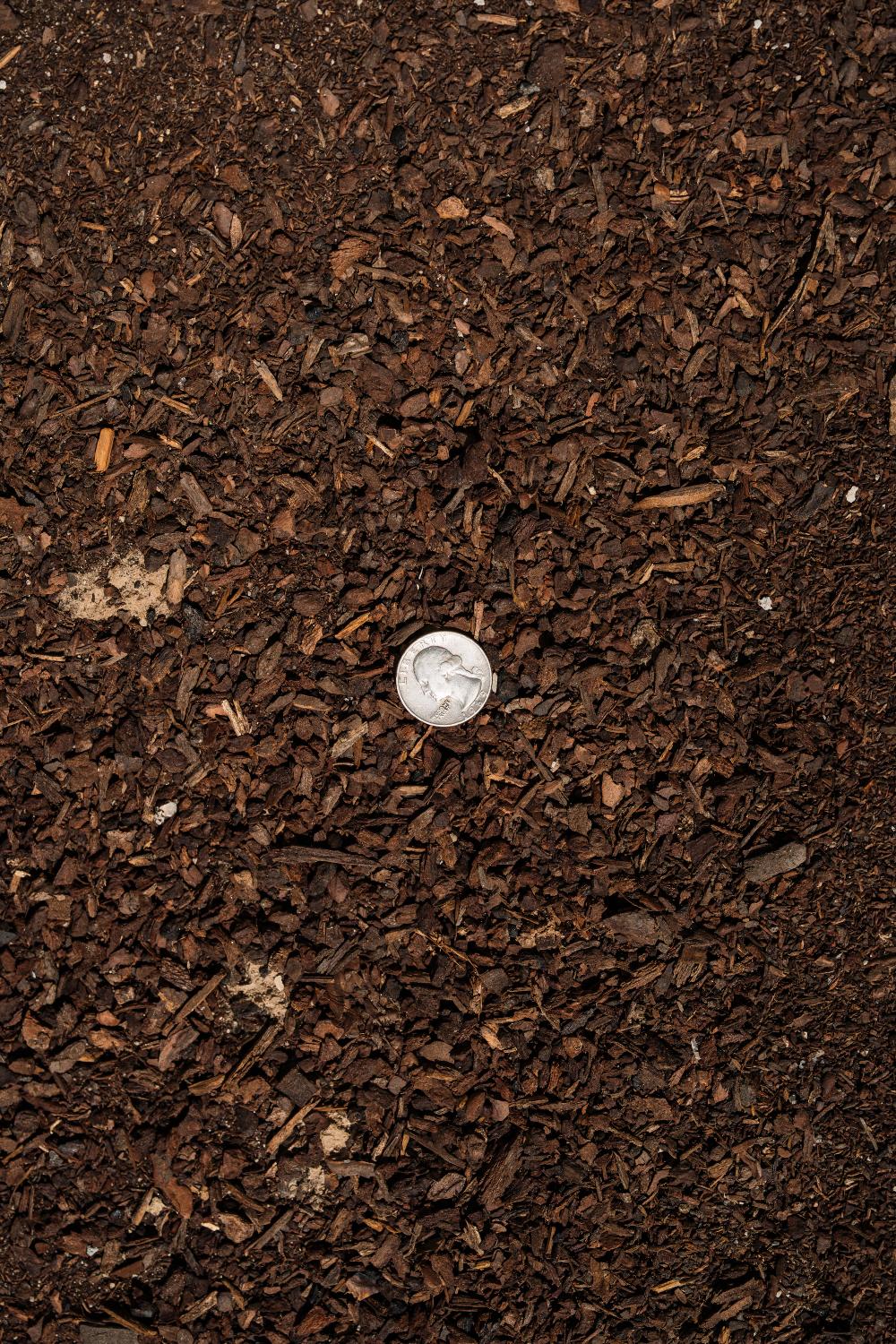
Red Humus
90 sqft per yard @ 2″ Depth
Closed
Hours:
Mon-Sat: 6:30 AM - 4:00 PM
Sunday: Closed
Why Red Humus? Use Cases and Performance
Red humus is a decomposed organic soil amendment with a lighter, reddish brown tone that sets it apart from the darker, near-black look of our black humus. Both products do the same core job, breaking up compaction, adding organic matter, and improving how soil holds moisture and air around roots. The difference customers actually care about is color and, in many cases, texture. Red humus tends to work better where you want an amendment that reads as soil rather than as mulch once it is tilled in, and where a very dark finish would clash with the surrounding ground or hardscape.
This is an amendment, not a standing layer. It gets tilled or forked into existing soil to improve what is already there. It is not a substitute for top soil, which is a plantable soil product you install at depth, and it is not fill dirt, which is a compactable structural material. Spreading red humus a few inches deep and calling it a planting bed is the single most common misuse we see, and it does not hold together the way a real soil layer does under foot traffic or irrigation.
What people use red humus for
- Amending vegetable and flower beds where the existing soil is workable but low in organic matter.
- Improving native soil before planting shrubs, trees, and perennials, blended into the backfill rather than used alone.
- Refreshing planting beds seasonally, working a layer into the top few inches around established plants without disturbing roots.
- Lawn renovation, tilled into the top several inches before a re-seed or sod replacement on tired turf.
- Color-matched top-dressing in beds where a red-brown tone fits the surrounding soil or décor better than a black amendment.
- Blending into raised bed mixes alongside top soil for a lighter-toned finished bed.
Why Central Valley soil needs an amendment at all
Fresno and Clovis sit on soil that is frequently heavy in clay, low in organic matter, and often mildly to moderately alkaline. None of that is unusual for the region, but it does mean that soil straight out of the ground rarely supports vigorous root growth on its own. Clay particles are small and pack tightly, squeezing out the pore space roots and water both need. Organic matter breaks that structure open. It gives clay somewhere to breathe and gives sandy soil something to hold onto, which is why amendment is one of the highest-value, lowest-cost things you can do to a Valley yard before you plant anything.
Coverage math
One cubic yard covers roughly 160 sq ft at 2" deep, about 90 sq ft at the standard 3.5" tilling depth we typically recommend, and about 80 sq ft at 4". Run your own dimensions through our calculators, or call 559-233-6603 with the square footage and we will do the math.
Buying red humus in Fresno
We sell red humus by the yard from our yard at 3562 South Elm Avenue in Fresno, Monday through Saturday, 6:30 AM to 4:00 PM. Load it yourself, have our crew load your truck or trailer, rent a dump trailer for a self-haul, or have it delivered by dump truck. Organic material holds moisture, so a load that looks reasonable dry can run noticeably heavier after a rain. Call 559-233-6603 before you commit to a vehicle and a quantity.
Red Humus: Guidance for Your Situation
Pick the description that fits you best. Specs, steps, and pricing questions differ for a weekend project versus a bid or a compliance inspection.
For homeowners and DIY gardeners
Amending Your Beds and Lawn With Red Humus
Most homeowner uses for red humus fall into three categories: refreshing an established bed, prepping a new bed or lawn area, and backfilling around new plantings. The amount you need and the way you work it in change with each.
How much red humus should I till in?
| Project | Amendment depth before tilling | Notes |
|---|---|---|
| New vegetable or flower bed | 2"-3" tilled into top 6"-8" of native soil | Blend rather than layer; a distinct amendment layer on top of unworked soil does not integrate. |
| Established bed refresh | 1"-2" worked into the top few inches | Keep it shallow around existing root zones to avoid disturbing established plants. |
| Lawn renovation before reseeding | 1"-2" tilled into top 4"-6" | Do this before seed or sod goes down, not after. |
| Tree and shrub planting backfill | About one part amendment to two or three parts native soil | Do not backfill a hole with pure amendment. A rich pocket in heavy clay holds water like a bathtub and can rot roots. |
| Raised bed blend | One part red humus to two parts top soil | Gives a lighter finished color than a black humus blend, with the same structural benefit. |
Step-by-step: amending an existing planting bed
- Clear the bed. Pull weeds and remove debris so the amendment mixes into soil, not into old mulch or root mats.
- Loosen the top layer. Fork or till the existing soil 6" to 8" deep. Amendment worked into loose soil integrates; amendment laid on top of compacted soil just sits there.
- Spread red humus evenly. For most beds, 2" to 3" spread across the surface is a reasonable starting point before tilling.
- Till or fork it in thoroughly. Work until the amendment is distributed through the loosened layer rather than concentrated near the surface.
- Rake and level. Smooth the bed and remove clumps or debris that surfaced during tilling.
- Water it in. A thorough watering settles the blend and helps you spot low areas before you plant.
- Plant and mulch. A surface mulch such as walk-on bark or deco bark on top of the amended soil holds moisture and slows weed pressure.
Red humus around established plants
For beds that already have shrubs, perennials, or trees in place, deep tilling is not an option without damaging roots. A shallow top-dress, worked lightly into the top inch or two with a hand fork and kept a few inches back from stems and trunks, adds organic matter over time without cutting into the root system. This is a slower fix than tilling a new bed, but it is the right approach once plants are established and it can be repeated seasonally.
Do not backfill planting holes with pure amendment
A shrub or tree hole filled entirely with rich organic material creates a soft pocket surrounded by harder native soil, and Valley clay holds water at that boundary. Blend amendment into the native backfill instead of replacing it outright.
Why choose red over black humus
The performance difference between our two humus products is modest; both improve soil structure and organic content. The decision usually comes down to appearance and what is already in the bed. Red humus reads lighter and warmer, which blends better against tan stucco, decomposed granite paths, and lighter mulches, and it is less visually stark against pale hardscape than a very dark amendment. If the bed already has dark bark or a black humus history, matching color matters more than most people expect once the bed is planted and viewed as a whole.
Cost and getting it home
Red humus is priced by the yard and we quote it live, since organic material pricing shifts through the season. Call 559-233-6603. A single cubic yard is a manageable load for most pickups when dry; wet material after a rain event runs heavier and can push you past a safe payload sooner than you would guess. For more than a yard or two, either take delivery or rent a dump trailer.
Best time of year to amend in Fresno
Fall is the strongest window, since amending ahead of the wet season gives organic material time to integrate before spring planting and lets the mild weather support root recovery from tilling. Late winter and early spring, ahead of the spring planting rush, is a close second. Amending in the height of summer works but adds stress to whatever is already growing in the bed, so water more attentively for a couple of weeks afterward if that is your only option.
For landscapers, builders, and property managers
Bulk Amendment Ordering, Blending, and Job-Site Logistics
Red humus moves in volume on renovation and turnover work where color match to existing beds matters as much as the soil science. It is a straightforward product to spec, but the ordering math and the placement sequence are worth getting right up front.
Ordering and quantities
| Tilled depth | Coverage per cubic yard | Typical application |
|---|---|---|
| 1" | ~324 sq ft | Light top-dress on established beds |
| 2" | ~160 sq ft | Standard bed amendment before tilling |
| 3" | ~108 sq ft | Heavier amendment ratio for poor native soil |
| 3.5" | ~90 sq ft | Our standard reference depth for this product |
| 4" | ~80 sq ft | Vegetable production beds, high organic demand |
Blend ratios and placement notes
- Specify the ratio, not just the product. A common landscape blend runs one part amendment to two or three parts native soil or top soil by volume; production nursery and vegetable work sometimes goes richer.
- Till to a real depth. Surface-broadcast amendment that never gets worked into the profile provides a fraction of the benefit of the same material tilled 6" to 8" deep.
- Sequence before hardscape and irrigation. Amend and till before final grade, irrigation trenching, and any hardscape install, since tilling after those are in place risks cutting lines and disturbing base work.
- Match color across phased planting. On multi-phase jobs or infill planting into an established landscape, confirm which humus product was used originally so new beds do not read as a visibly different soil color next to mature ones.
- Do not use as backfill for structural or drainage trenches. Amendment holds water; it is the wrong material anywhere you need predictable drainage or compaction.
Product selection by scope
| Scope | Specify | Why |
|---|---|---|
| New planting bed on poor native soil | Red humus tilled into native soil, or blended with top soil | Adds organic content and structure where existing soil lacks both |
| Color-sensitive infill planting | Match to existing humus product on site | Avoids a visible seam between old and new bed soil |
| Turf renovation before reseed | Red or black humus tilled into top several inches | Improves germination conditions and early root establishment |
| Grade raise or structural fill | Fill dirt | Amendment is not a compactable structural material |
| Surface mulch over finished beds | Walk-on bark or deco bark | Amendment is worked into soil, mulch stays on top of it |
Delivery, staging, and self-haul
- Bulk delivery: dump truck delivery across Fresno, Clovis, and the surrounding Valley, including staged drops on larger renovation sites.
- Yard loading: we load contractor trucks and trailers at 3562 South Elm Avenue, Mon-Sat 6:30 AM-4:00 PM.
- Self-haul rentals: dump trailers and trucks when your equipment is committed on another job.
- Combined loads: amendment plus top soil plus bark mulch on one delivery is standard practice. Give us the placement sequence and we will load and route accordingly.
- Turnover season: property management turnovers and HOA seasonal color changes cluster in fall and spring. Order ahead during those windows.
Bulk pricing and accounts
We quote bulk amendment and repeat-account pricing directly at 559-233-6603 or through our contact page. Organic material cost shifts seasonally more than aggregate does, so we price it live rather than publish a number that will be stale by the time a bid goes out. For recurring property management turnovers, HOA seasonal planting, or production landscape accounts, ask about standing pricing so estimating does not require a fresh quote on every job.
For serious vegetable growers and gardeners
Building Productive Growing Soil With Red Humus
Growers pushing for real vegetable yield in Fresno's heat care about a narrower set of questions than the average homeowner: how much organic matter does this actually add, how does it affect water-holding in sandy versus clay ground, and how do you keep feeding a bed year over year without over-amending it.
What red humus does in a growing bed
Decomposed organic matter increases the soil's capacity to hold both water and nutrients between irrigation cycles, which matters enormously once daytime temperatures sit above 100°F for weeks at a stretch. In clay-heavy Valley ground, the same organic matter opens up pore space so roots can push through instead of stopping at a compacted layer. In the sandier pockets found in parts of the Valley, it slows drainage just enough that water and fertilizer stay in the root zone longer instead of running straight through.
Building a new vegetable bed
| Bed type | Recommended blend | Notes |
|---|---|---|
| In-ground row crops | One part red humus tilled into two to three parts native soil, 8"-10" deep | Deeper tilling supports root crops and heavy feeders like tomatoes and squash. |
| Raised beds (new build) | One part red humus to two parts top soil | A lighter finished color than a black humus mix if that matters to the look of the space. |
| Existing raised bed refresh | 1"-2" worked into the top 4"-6" between seasons | Replenishes organic matter consumed by the previous crop cycle. |
Seasonal maintenance
- Between seasonal plantings, work a fresh 1" to 2" layer into the top several inches rather than waiting until the bed is visibly depleted.
- After a heavy-feeding crop like tomatoes, squash, or corn, replenish organic matter before the next planting rather than relying on fertilizer alone to carry the soil.
- In beds that get watered daily through summer, organic matter breaks down faster under the combination of heat and moisture, so plan to amend more often than a mild-climate guide would suggest.
- Avoid over-amending season after season without a break. Excess organic matter in some situations can tie up nitrogen temporarily as it continues to break down, so moderate ratios and consistent applications beat one massive dose.
A note on soil testing
We do not test or certify the nutrient content, pH, or salinity of any bulk amendment we sell, and we are not going to invent numbers for you. If your growing operation needs documented nutrient or salinity data, have a soil sample tested through a lab or your local agricultural extension after you have blended and settled the bed. What we can speak to reliably is texture, drainage behavior, and how the product handles in a Valley clay or sandy loam base, and we are happy to talk through that at 559-233-6603.
Buying at growing-season volume
Serious growers tend to order ahead of both spring and fall planting windows rather than mid-season, since that is when we are moving the highest volume of amendment and lead times stretch. If you are running multiple beds or a market garden scale operation, call ahead for a bulk quote and we will talk through delivery versus self-haul based on how many yards you need.
Red Humus vs. Black Humus vs. Top Soil vs. Fill Dirt
All four of these products are sold by the yard and all four look like some shade of dirt in the back of a truck. They are not interchangeable, and the wrong one on a job usually means digging it back out.
| Product | What it is | Use it for | Do not use it for |
|---|---|---|---|
| Red Humus | Organic soil amendment, lighter reddish brown tone | Tilling into beds and lawns, color-matched top-dressing | A standalone soil layer or structural fill |
| Black Humus | Organic soil amendment, darker near-black tone | Tilling into beds where a dark finished color is wanted | A standalone soil layer or structural fill |
| Top Soil | Screened, plantable soil | Lawns, planting beds, leveling, install as a standing layer | Amending soil that is already workable, since it is not an organic concentrate |
| Fill Dirt | Unscreened compactable earth | Raising grade, filling voids, building pads | Anything you intend to plant into or amend |
| Potting Soil Mix | Light container medium | Pots and planters | In-ground beds or lawns, too light and too costly by the yard |
Red humus vs. black humus, which one do I need
Structurally the two amendments do the same job: both add organic matter and improve soil texture. The practical choice comes down to color and what you are matching. Choose red humus when you want a lighter, warmer finished soil tone, when the bed sits against light stucco, decomposed granite, or pale mulch, or when you are matching existing beds that were amended with a lighter product previously. Choose black humus when you want maximum visual contrast against light hardscape or when matching darker existing beds. If color is not a factor at all, either product performs comparably as an amendment, so the decision is largely aesthetic.
Amendment vs. importing top soil
If the existing ground is structurally sound and simply low in organic matter, tilling in an amendment is cheaper and often more effective than importing bulk top soil. Bring in top soil instead when you need to raise height, when the existing surface is subsoil or construction spoil with no real topsoil profile left, or when a compacted layer means there is nothing plantable to amend in the first place. Many jobs use both: import top soil to build the plantable layer, then work in an amendment to improve its structure and organic content.
Red Humus in Central Valley Conditions
Fresno and Clovis growing conditions push soil amendment from a nice-to-have into something closer to a requirement. Long, dry, extremely hot summers, a short concentrated wet season, clay-heavy native soil in much of the region, and irrigation water that leaves mineral residue behind all change how organic matter behaves once it is tilled in.
Heat, moisture retention, and irrigation
Once daytime highs sit above 100°F for weeks at a time, soil that cannot hold moisture between irrigation cycles stresses plants regardless of how much water you apply. Organic matter increases the soil's water-holding capacity, which stretches the interval between irrigation cycles and buffers root zones against the swings between watering and drying that are common with drip and sprinkler schedules in summer. Beds amended with red humus generally need less frequent, though not necessarily less total, irrigation than unamended clay or sandy ground over a full summer.
Clay and hardpan
Much of the native ground around Fresno and Clovis carries a heavy clay fraction, and some lots sit over a compacted hardpan layer left from grading or from the soil's own mineral structure. Tilling amendment into clay opens pore space so water can move through instead of pooling on the surface, and it gives roots a path around, rather than a wall to stop at. Amendment alone does not break through true hardpan; that requires mechanical ripping or breaking the layer before tilling in organic matter, since amendment worked only into a thin surface layer above hardpan still leaves the same shallow, saturated root zone underneath.
Winter rain and tule fog
The Valley's rainy season is short but occasionally intense, and freshly amended beds are more vulnerable to surface erosion and compaction from foot traffic while wet than established, mulched ground. Working amendment in during a dry stretch, then mulching over the finished bed, protects the loosened soil structure through the first rains rather than letting it wash or compact before roots have a chance to establish. Tule fog season brings extended cool, damp mornings that slow surface drying; amended beds drain that dampness through the profile better than compacted clay, which tends to stay soggy on top for days after a fog-heavy stretch.
Wind, dust, and salt buildup
Valley wind events move a lot of fine dust, and bare amended soil left untilled or unmulched is more prone to losing its top layer to wind than a settled, planted bed. Mulching over freshly amended ground cuts that loss substantially. On the water side, Fresno-area irrigation water carries dissolved minerals that concentrate at the soil surface as water evaporates, which over years can build up as a pale crust in unmulched beds. Organic matter helps buffer some of that effect and a surface mulch reduces the evaporation that concentrates it in the first place.
Frequently Asked Questions
Have questions? We've got answers. If you don't see your question below, give us a call at (559) 233-6603.