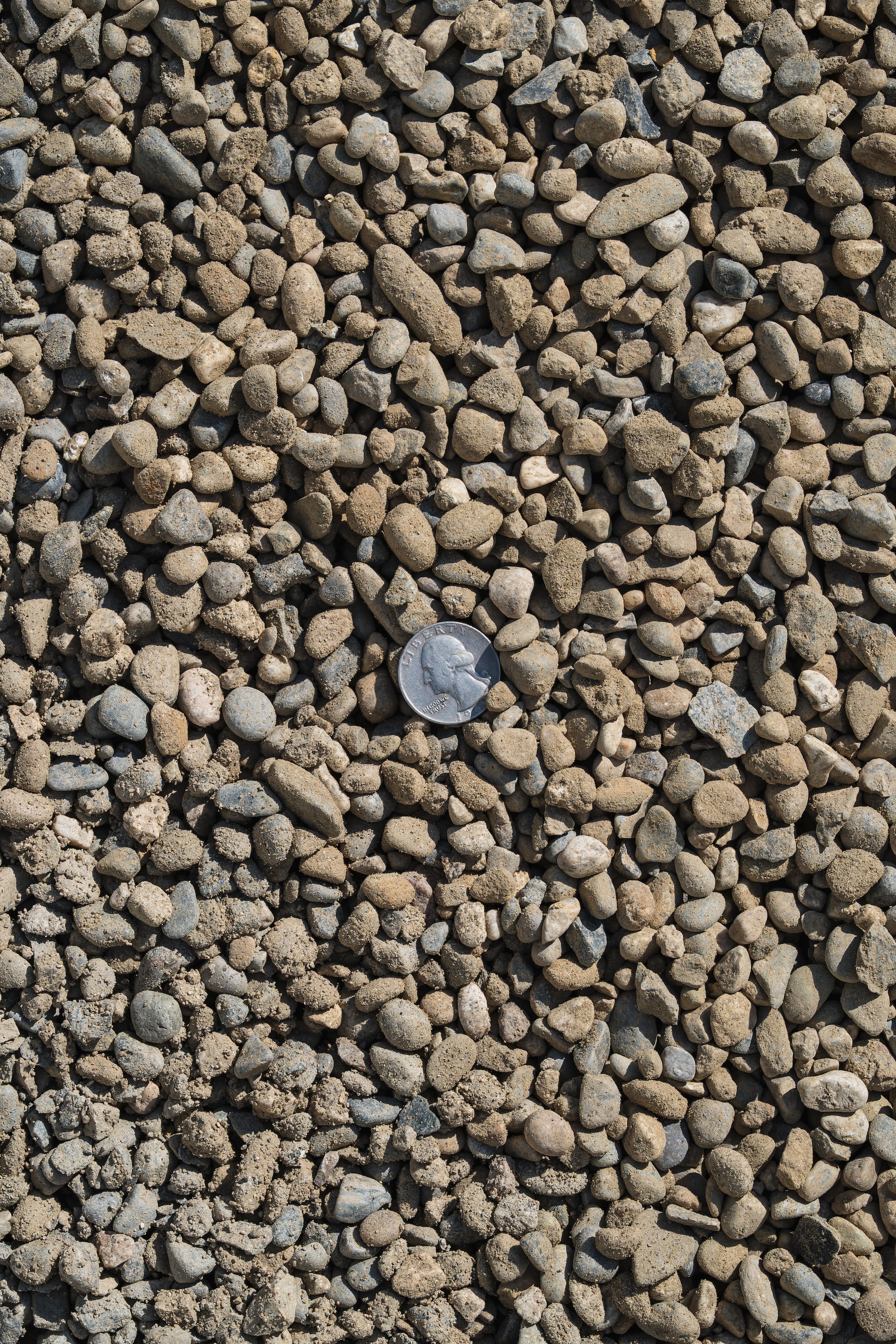
3/8" Pea Gravel
90 sqft per ton @ 2″ Depth
Closed
Hours:
Mon-Sat: 6:30 AM - 4:00 PM
Sunday: Closed
Why 3/8" Pea Gravel? Use Cases and Performance
3/8" pea gravel is the smooth, rounded, pea-sized aggregate you picture when someone says "gravel path." It is naturally rounded rather than crushed, which gives it the soft, tumbled shape and mixed earth-tone coloring that sets it apart from angular crushed rock. That shape is the whole story with this material. Rounded stones roll past each other instead of locking together, so pea gravel never compacts into a firm, load-bearing surface the way 3/8" Crush Granite does. What it gives up in stability it makes up in comfort, drainage, and a casual, natural look that reads well in gardens, play areas, and drainage applications.
Because the stones stay loose, pea gravel shifts underfoot in a way people either like or do not. It is soft and forgiving to walk on in bare feet or sandals, it does not hold heat the way a paved surface does, and it drains almost instantly, which is why you will find it under decks, around drain lines, and in dry wells as often as you find it in a garden bed. What it is not is a driveway material, a compaction base, or a surface you want migrating into a neighboring lawn without an edge to stop it.
Where 3/8" pea gravel is the right call
- Garden paths and stepping-stone infill where a soft, informal walking surface fits the design better than a hard paved path.
- Play areas and casual seating areas where the rounded shape is more comfortable underfoot than crushed rock, though it is not a certified fall-height safety surfacing product.
- Drainage applications: french drains, dry wells, and around downspouts, where its uniform round shape keeps water moving instead of clogging.
- Potted plants and container drainage layers, and as a decorative top-dress over potting soil to cut down on splash and evaporation.
- Dog runs and small pet areas, where the smooth stones are gentler on paws than angular gravel, though it does track more.
- Decorative ground cover in beds and around water features, ponds, and fountains, where the mixed tan and gray tones and rounded shape look natural rather than industrial.
Where it is not the right call
Skip pea gravel anywhere you need a stable, load-bearing surface. It will not hold a driveway, a parking pad, or a heavily used walkway without deep containment and constant top-dressing, because rounded stone rolls out from under tires and feet instead of locking in place. For that job, look at 3/4" Crush Granite or 3/8" Crush Granite instead. It is also a poor choice on slopes without strong edging, since round stone migrates downhill faster than angular material, and it is not the right pick directly under swing sets or play structures where a manufacturer specifies a certified impact-attenuating surface, since we cannot make that certification for this product.
Not sure how much you need?
Run your square footage and depth through our material coverage calculators before you call. It speeds up the quote conversation and heads off the most common ordering mistake, which is under-ordering on depth and not accounting for how much pea gravel settles into loose soil under it.
Buying it in Fresno
We sell 3/8" pea gravel by the ton out of our yard at 3562 South Elm Avenue in Fresno. You can load it yourself, we can load your truck or trailer, we can rent you a dump trailer to self-haul, or we can deliver and dump it where you want it. Call 559-233-6603 to confirm current pricing and availability. Aggregate pricing moves with fuel and quarry costs, so we quote it live rather than publishing a number that goes stale.
3/8" Pea Gravel: Guidance for Your Situation
Pick the description that fits you best. Specs, steps, and pricing questions differ for a weekend project versus a bid or a compliance inspection.
For homeowners and garden designers
Installing and Designing With Pea Gravel
Pea gravel is one of the more forgiving materials to install yourself, but it is also one of the easiest to get wrong in a way that shows up months later as gravel scattered across the lawn. The fix for almost every complaint about pea gravel migrating, thinning out, or growing weeds is the same: contain it, give it a fabric layer, and pick the right depth for the job.
How much depth do I actually need?
| Application | Recommended depth | Notes |
|---|---|---|
| Decorative ground cover in beds | 2" | Standard depth for coverage over landscape fabric. |
| Garden and walking paths | 2"-3" | Deeper resists show-through of the fabric or soil underneath. |
| Around drain lines and french drains | 3"-4" surrounding the pipe | Wrap in filter fabric to keep soil from washing in. |
| Container and pot drainage layer | 1" at the base of the pot | A thin layer is enough; more just wastes soil volume. |
| Play or seating area cover | 3"-4" | Deeper cushions better but still is not a certified safety surface. |
Step-by-step: a DIY pea gravel path or bed
- Strip the organics. Remove grass, weeds, and roots down to firm soil. Anything left behind will push up through the gravel within a season.
- Grade for water. Slope the area slightly away from the house or any low structure so water has somewhere to go instead of pooling in the gravel.
- Lay landscape fabric. This is the step people skip and regret. Fabric keeps soil from working up into the gravel and cuts weed germination dramatically. Skip it under vegetable beds or anywhere you plan to dig later.
- Set your edging first. Steel, aluminum, plastic paver edging, or a shallow trench with a mow strip all work. Without a physical barrier, pea gravel walks onto the lawn and into flower beds within weeks.
- Spread the gravel in one even lift. Unlike crushed rock, pea gravel does not need compaction in lifts since it is not meant to lock together. Rake it level and consistent.
- Top off over time. Expect to add a bit more gravel seasonally as it settles into the fabric and gets displaced by foot traffic, rain, and irrigation.
Design: what pea gravel looks like in a Fresno yard
Pea gravel reads as a soft mix of tan, buff, gray, and rust tones, rounded and small enough to look almost sandy from a distance. It is a warmer, more informal look than crushed granite or lava rock, which is why it shows up so often in cottage gardens, Mediterranean-style landscaping, and older Fresno neighborhoods with mature trees and casual planting beds.
- Around stepping stones or flagstone, pea gravel fills the gaps with a soft, walkable texture that still lets water drain through.
- In a dry creek bed, mix pea gravel with larger cobble like 1.5"-1" River Rock for a more natural, graded look rather than a uniform field of one size.
- Around a fountain or pondless water feature, the small rounded stone hides tubing and liner edges without the sharp look of crushed rock.
- In raised planter beds and around succulents, a thin pea gravel top-dress over soil looks clean and cuts down on soil splash onto foliage during watering.
- Paired with railroad ties, weathered wood edging, or rustic steel borders, pea gravel leans into a relaxed, cottage-garden feel rather than the modern hardscape look crushed granite gives.
What DIY installs typically cost
Aggregate is priced by the ton and moves with market conditions, so call 559-233-6603 for a live number. Beyond the material, budget for landscape fabric, edging, and either a delivery fee or a trailer rental. Pea gravel projects tend to be smaller in volume than driveway jobs, so a single trip in a rented dump trailer or even a pickup bed often covers a typical garden bed or path.
The single most common DIY mistake
Skipping the landscape fabric to save a small amount of money up front. Without it, weeds root directly in the soil under the gravel and soil works its way up between the stones, and within a year or two the bed needs to be dug out and redone. The fabric is cheap insurance against a much bigger job later.
Maintenance
- Migration: expect some gravel to end up outside its bed no matter how good the edging is. A push broom or leaf blower every few weeks keeps it contained.
- Weeds: fabric handles most of it, but windblown dirt and seeds that land on top of the gravel will still sprout. A pre-emergent in spring and fall catches the rest.
- Leaf litter: a leaf blower on low setting works; on high, you will scatter the gravel along with the leaves.
- Top-dressing: plan on adding a bit of gravel every year or two as it settles and gets displaced, more often in high-traffic paths.
For contractors, landscapers, and property managers
Specs, Bulk Ordering, and Job-Site Logistics
Pea gravel moves in volume on drainage work, decorative installs, and irrigation trenching jobs, so the yard is set up around fast loading rather than retail hand-holding. Mon through Sat, 6:30 AM to 4:00 PM, first load out the gate early. Call 559-233-6603 the day before on anything over a few yards and we will have it staged.
Working specs
| Property | Working value / behavior |
|---|---|
| Nominal size | 3/8", naturally rounded |
| Sold by | The ton; loaded at our Fresno yard or delivered |
| Shape | Rounded, tumbled, does not interlock under compaction |
| Typical use | Decorative ground cover, drainage, walking paths, container and pot drainage |
| Compaction | Does not compact into a bearing surface; settles under fabric rather than locking |
| Drainage | Free-draining, uniform particle size resists clogging around drain pipe |
| Coverage | Calculated at 2" depth, see our calculators for takeoffs |
Placement notes for landscape and drainage crews
- Prep the subgrade. Strip organics and grade to drain. Pea gravel does not need a compacted base the way an aggregate driveway does, since it is never load-bearing.
- Fabric layer. Standard practice is landscape fabric or filter fabric under decorative beds and wrapped around perforated drain pipe in french drain applications, to keep fines from migrating into the void space.
- Edge restraint. Specify containment on every installation that borders turf, planting beds, or a walkway. Without it, crews will be back for top-dress and cleanup calls within a season.
- Single lift placement. Spread in one even lift and rake level. There is no benefit to lift-and-compact placement with a rounded, non-interlocking aggregate.
- Drainage assemblies. In french drains and dry wells, size the surrounding fabric-wrapped gravel envelope to the pipe manufacturer's spec and keep the gravel clean of fines during placement to preserve void space.
Job-site logistics and hauling
- Yard pickup: we load trucks and trailers on site at 3562 South Elm Avenue, Fresno, Mon through Sat, 6:30 AM to 4:00 PM.
- Delivery: dump truck delivery for bulk quantities, including staged multi-load deliveries on larger jobs.
- Self-haul: dump trailer and truck rentals when your own equipment is committed on another site.
- Multi-material orders: pea gravel plus drain pipe plus fabric plus fill sand on the same delivery run is normal. Bundle it and we will sequence the loads to match your placement order.
- Access: tell us about tight residential access, low lines, or gated HOA entries when you order, not when the truck arrives.
Bulk and account pricing
We quote bulk and repeat-account pricing directly rather than publishing rates, because aggregate cost moves with fuel and quarry pricing and because volume, haul distance, and load count all change the number. Call 559-233-6603 or send us the job details and we will price the material and the freight together. If you are bidding recurring work such as HOA turnovers, drainage retrofits, or production landscape installs, ask about standing pricing so you are not re-quoting on every draw.
Commercial and HOA applications
Pea gravel shows up in commercial work most often in drainage assemblies and in decorative courtyards or entry beds rather than in high-traffic common areas, since property managers generally want a surface that stays put with less maintenance. For walkways and heavily used common areas, we typically steer HOA and commercial accounts toward 3/4" Crush Granite instead, and reserve pea gravel for planter beds, water feature surrounds, and drain infrastructure where its drainage properties matter more than its stability.
Contractor accounts
If you buy from us regularly, see our contractor page for how accounts, staged loads, and repeat pricing work.
For gardeners, growers, and container-plant enthusiasts
Using Pea Gravel in Gardens, Containers, and Drainage
For gardeners, pea gravel earns its place less as a ground cover and more as a functional layer that manages water around plants. It does not compact, so roots and water move through it easily, and its uniform size means it will not clog the drainage holes in a pot the way a mixed-size aggregate might.
Container and pot drainage
A shallow layer of pea gravel, roughly one inch, at the bottom of a large planter or pot improves drainage by keeping soil away from direct contact with the drainage hole. It will not turn a pot without drainage holes into a well-drained container, since standing water below the gravel layer still saturates soil above it, but in a pot that already drains, it helps keep the medium from washing out and clogging the opening.
Top-dressing potted plants and raised beds
- A thin top-dress layer over potting soil in containers reduces soil splash onto foliage during watering, which cuts down on some fungal leaf issues on lower leaves.
- It slows surface evaporation slightly compared to bare soil, which can stretch out watering intervals a bit in the Fresno summer heat.
- It discourages some digging pets and squirrels from disturbing container soil, though it will not stop a determined animal.
- For succulents and cacti in containers, a pea gravel top-dress keeps stems from sitting directly against wet soil, which helps prevent rot at the base of the plant.
Raised bed pathways and greenhouse floors
Between raised garden beds, pea gravel over landscape fabric makes a clean, low-mud walking surface that drains fast after irrigation or rain, which matters in a clay-heavy yard where bare dirt paths turn to mud after a winter storm and cake to boots for days. In a greenhouse or shade structure, a pea gravel floor drains overspray and hose runoff without pooling, and it does not grow the algae film a solid concrete floor sometimes does in a humid, shaded structure.
What it will not do for growing
Pea gravel is inert rock. It adds no nutrients, does not hold moisture the way an organic mulch does, and does not break down to improve soil structure over time. Where you actually want to feed the soil around plantings, use black humus or potting soil mix instead, and save pea gravel for the drainage and pathway roles where its inert, free-draining nature is the advantage rather than a limitation.
Buying smaller quantities
Container and raised-bed projects often need far less than a full ton. Call 559-233-6603 and we will help size a small order, or ask about picking up a partial load at the yard at 3562 South Elm Avenue.
How 3/8" Pea Gravel Compares to the Alternatives
For most customers, the useful comparison is not pea gravel versus some exotic product. It is pea gravel versus the other small aggregates and decorative rock sitting right next to it in the yard, and the decision usually comes down to whether you need a stable surface or a soft, free-draining one.
| Material | Surface stability | Best for | Trade-off vs. pea gravel |
|---|---|---|---|
| 3/8" Pea Gravel | Low, rounded, does not lock together | Garden paths, drainage, containers, decorative beds | N/A |
| 3/8" Crush Granite | Moderate to high, angular, compacts | Walkways, jointing material, firmer decorative cover | Sharper underfoot, not as soft or rounded a look |
| 3/4" Crush Granite | High, angular, hard, compacts and locks | Driveways, parking, commercial areas | Far more stable but chunky and sharp, not for bare feet |
| 1.5"-1" River Rock | Low to moderate | Dry creek beds, larger-scale decorative accents | Larger and rounder still, a coarser look than pea gravel |
| Fill Sand | Low, fine particle | Leveling, bedding, under pavers | Not decorative, and does not drain as freely as an open-graded gravel |
Pea gravel vs. crush granite, which one do I need?
This is the comparison people get wrong most often, because both are small, similarly priced aggregates that can sit in the same bed. The shape difference changes the job entirely.
| Question | 3/8" Pea Gravel | 3/8" Crush Granite |
|---|---|---|
| Comfortable barefoot? | Yes, smooth and rounded | Less so, some angular edges remain |
| Stays put on a slope? | No, rolls without strong edging | Better, compacts and holds grade |
| Good for drainage? | Yes, excellent, uniform round shape | Adequate but not the first choice |
| Walking path that holds shape? | Softer, shifts underfoot | Firmer, compacts into a stable surface |
| Natural, informal look? | Yes, mixed earth tones | More uniform, quarried appearance |
Pea gravel vs. mulch for ground cover
For a decorative bed, the comparison comes down to whether you want a permanent, inert cover or one that feeds the soil. Pea gravel never breaks down, needs no annual replacement, and holds up to Fresno's dry season without blowing away or fading, which is why it shows up so often around drought-tolerant plantings and rock gardens. Organic mulch like walk-on bark or black humus feeds soil biology, moderates soil temperature more effectively in extreme heat, and breaks down over time, which means periodic replacement but also an improving soil profile underneath. Many Fresno landscapes use both: pea gravel or rock as permanent structure and pathways, mulch around the plantings themselves.
Pea Gravel in Central Valley Conditions
Material behavior is local. A rock that performs well in a mild, wet coastal climate can behave differently in Fresno, where summer surface temperatures are extreme, annual rainfall is low but arrives in concentrated winter storms, and the native soil profile is heavy on clay. Here is what that means for pea gravel specifically.
Summer heat
Pea gravel's mixed tan and gray tones sit in the middle of the catalog for solar heat absorption, cooler than a dark rock like black lava but warmer than bright white rock. Because it is small and loose rather than locked into a solid mass, it also loses heat faster once shade or evening arrives than a dense compacted surface does. It is still gravel in full Fresno sun in July, so keep it out of areas where bare feet linger for long periods during peak afternoon heat, and give a mulch ring rather than gravel to plants with tender stems or shallow roots.
Clay soil and drainage
Much of the Fresno-Clovis area sits on soils with a significant clay fraction, which drains slowly and holds water at the surface after irrigation or rain. Pea gravel over landscape fabric does not fix a clay drainage problem on its own, but it does keep the surface itself from turning to standing mud, since water passes through the open-graded rock even when the soil underneath is slow to absorb it. For real drainage correction on clay sites, pair pea gravel drain assemblies with proper grading and, where needed, a french drain routed to daylight or a dry well.
Winter storms and migration
Fresno gets most of its rain in a handful of concentrated winter events rather than steady drizzle, and that is exactly the condition that moves loose, rounded gravel. A hard, short downpour on a sloped pea gravel bed without edging will carry stone into the lawn, the gutter, or a neighboring path. Strong edge restraint and attention to grade matter more with pea gravel than with almost any other product in the yard, precisely because it has no ability to interlock and resist that movement on its own.
Wind and dust
Pea gravel itself is heavy enough that Central Valley wind does not move the stone, but the fine dust and windblown soil that settle onto and between the stones over a dry summer do accumulate, especially near agricultural areas and unpaved lots. That buildup is what feeds weed germination in an otherwise well-installed bed, and it is worth a periodic rinse or light raking to keep it from packing down into the void space between stones.
Irrigation and mineral buildup
Sprinkler overspray hitting pea gravel directly leaves the same white mineral deposits from Fresno's hard water that show up on any rock surface, and because pea gravel sits low and close to soil grade, it also tends to collect more soil splash from drip and spray irrigation than a raised or contained bed. Adjusting heads so they water plants rather than the rock, and using drip irrigation where practical, keeps the gravel cleaner and reduces the rate at which soil and mineral buildup settle into it.
Local delivery area
We deliver pea gravel throughout Fresno, Clovis, Sanger, Selma, Kingsburg, Madera, and the surrounding Central Valley. Call 559-233-6603 to confirm delivery to your address, or rent a trailer and haul it yourself.
3/8" Pea Gravel: Frequently Asked Questions
Have questions? We've got answers. If you don't see your question below, give us a call at (559) 233-6603.