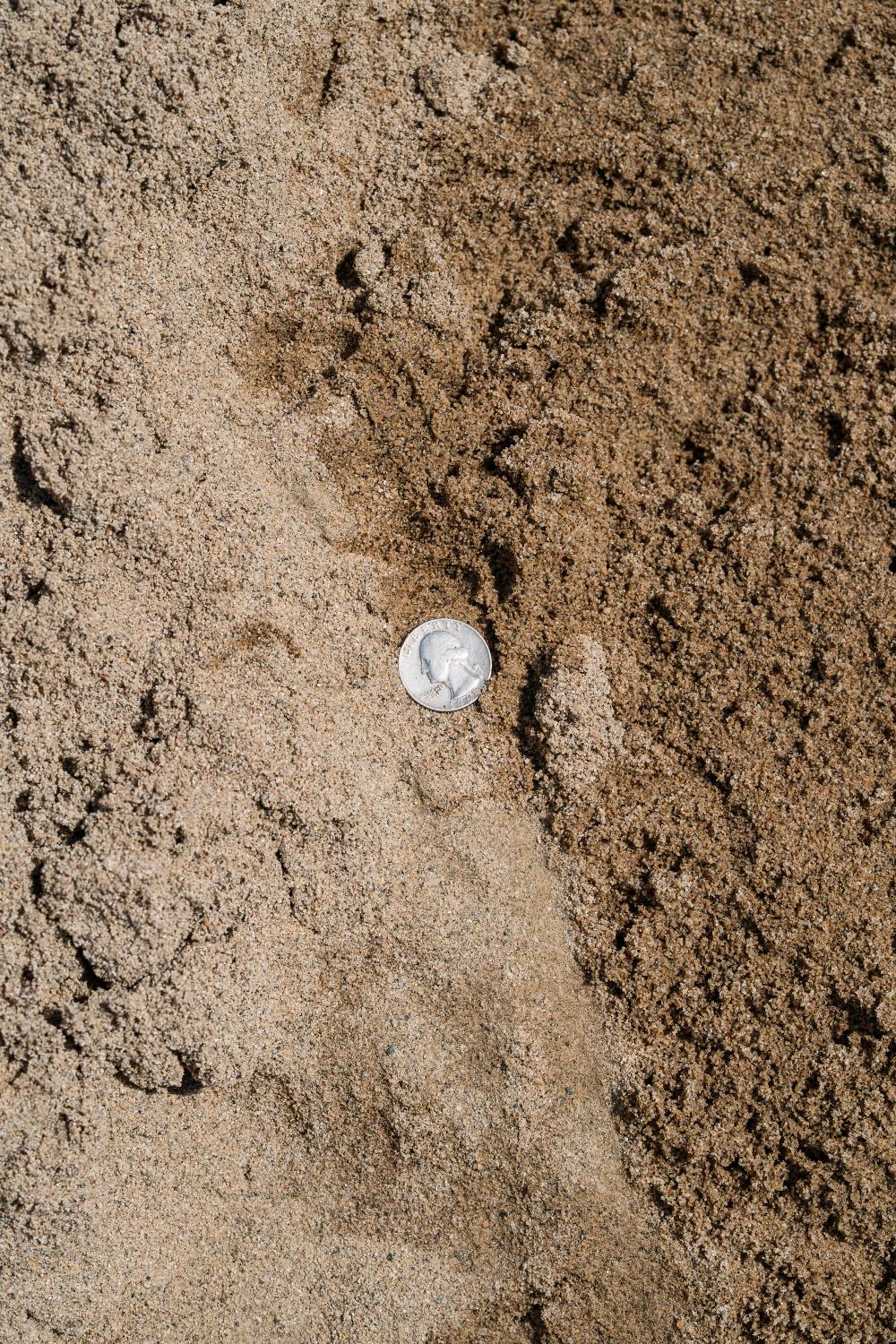
Fill Sand
90 sqft per ton @ 2″ Depth
Closed
Hours:
Mon-Sat: 6:30 AM - 4:00 PM
Sunday: Closed
Why Fill Sand? Use Cases and Performance
Fill sand is a general-purpose bulk sand used to raise grade, backfill trenches and voids, and provide a workable, free-draining base under pavers, slabs, and pools. It is coarser and less refined than plaster sand, and it is not soil, so it does not compact the way fill dirt does and it does not grow anything the way top soil does. Its job is volume and drainage, not fertility and not a polished finish coat.
Customers new to bulk materials often ask for "sand" without knowing there are several distinct sand products in a yard like ours, each suited to a different job. Fill sand is the coarse, economical workhorse. Plaster sand is finer and more consistent, meant for pool plaster and stucco coats where texture matters. Using the wrong one either wastes money on a refined product where a rough one would do, or produces a rough, gritty result where a smooth finish was expected.
What people use fill sand for
- Backfilling around pool walls, footings, and foundations where a free-draining, easy-to-compact material is needed instead of native clay.
- Bedding and leveling under pavers, flagstone, and slabs, providing a workable setting bed that shifts less than loose native soil.
- Filling low spots, trenches, and utility line backfill where drainage matters more than plant growth.
- Raising grade in areas that will later carry base rock, concrete, or hardscape rather than lawn or planting beds.
- Playground and sandbox base layers, where a coarse, well-draining sand is preferred over fine plaster sand.
- General construction fill where a granular, non-organic material is specified instead of dirt.
Why Central Valley job sites use so much of it
Fresno-area native soil leans heavy with clay. Clay compacts hard when dry and turns greasy and unstable when wet, which makes it a poor backfill choice around pools, foundations, and utility trenches where water needs somewhere to go. Fill sand drains instead of holding water against a wall or a pipe, and it is far easier to shovel, rake, and settle into tight spaces than a shovel full of Valley clay. That is the whole reason it shows up on so many pool and hardscape jobs in this region.
Coverage math
Figure roughly 90 sq ft per ton at 2" deep for fill sand. At 3" that works out to about 60 sq ft per ton, and at 4" about 45 sq ft per ton. Run your exact dimensions through our calculators, or call 559-233-6603 with your square footage and target depth.
Buying fill sand in Fresno
We sell fill sand by the ton from our yard at 3562 South Elm Avenue in Fresno, Monday through Saturday, 6:30 AM to 4:00 PM. Load it yourself, have us load your truck or trailer, rent a dump trailer for a self-haul, or have it delivered by dump truck. Sand is dense and a full-size load adds up in weight fast, so call 559-233-6603 before you plan a pickup-truck haul on more than a yard or two.
Fill Sand: Guidance for Your Situation
Pick the description that fits you best. Specs, steps, and pricing questions differ for a weekend project versus a bid or a compliance inspection.
For homeowners and DIY builders
Using Fill Sand Around the House
Most homeowner fill sand jobs fall into three categories: backfilling around something you just built or removed, leveling a paver or slab base, and filling a low spot that puddles. Each one wants a slightly different depth and a slightly different compaction approach.
How much depth do I need?
| Project | Depth of fill sand | Notes |
|---|---|---|
| Backfill around a pool wall or footing | To grade, in lifts | Place and lightly water-settle in 6"-8" lifts rather than one deep dump. |
| Paver or flagstone bedding layer | 1"-2" over compacted base | This is a setting bed, not the structural base. Base rock or road base goes underneath it. |
| Trench and utility line backfill | To grade, in lifts | Free-draining sand protects buried pipe and conduit better than clay clods. |
| Filling a low spot or puddle area | As needed to correct grade | Blend edges into surrounding grade so water does not just relocate to the next low point. |
| Sandbox or playground base | 6"-8" | Coarser fill sand drains better than fine sand and does not compact into a hard surface. |
Step-by-step: backfilling with fill sand
- Clear the area of debris, roots, and construction scraps before backfilling. Anything buried in the fill will settle unevenly later.
- Place sand in lifts of roughly 6 to 8 inches rather than filling a deep void in one pass.
- Water each lift lightly to help it settle into voids around pipes, footings, and irregular surfaces. Do not flood it; a light pass is enough.
- Tamp or lightly compact each lift by hand or with a plate compactor if the area will carry any load.
- Repeat in lifts until you reach finish grade, checking level as you go rather than only at the end.
- Leave a slight crown or slope away from structures so water sheds instead of pooling against a wall.
Fill sand vs. what you might already be picturing
Fill sand is not plaster sand, and it will not give you the smooth, fine texture that pool plaster or a stucco scratch coat needs. It is also not top soil, so nothing will grow in a straight layer of it, and it is not fill dirt, which compacts harder and cheaper for a general grade raise where drainage is not the priority. If your project is backfilling around a pool, leveling under pavers, or filling a trench, fill sand is the right call. If your project is raising a planting bed or building a compacted pad that will carry a structure, look at fill dirt or a base rock product instead.
Do not use fill sand as a planting layer
Sand alone drains too fast and holds almost no nutrients or moisture for most landscape plants. If you need a plantable layer, use top soil, and save fill sand for backfill and bedding work where drainage is the goal.
How much will it cost and how do I get it home?
Fill sand is priced by the ton and we quote it live, since aggregate and sand pricing shifts with fuel and supply costs. Call 559-233-6603 with your project details. Sand is heavy per unit volume, more than most soils, so a load that looks small in a wheelbarrow can still max out a half-ton pickup's payload. For anything past a yard or two, either take delivery or rent a dump trailer rather than overloading a truck.
Best time of year to do this in Fresno
Fill sand work is largely weather-independent compared to soil and planting projects, since you are not waiting on a growing season. The practical consideration is heat. Compacting and shoveling sand in a 105 degree Fresno afternoon is miserable and slower than doing the same work in the morning or in the cooler months. Winter rain is the other factor: sand drains well even when wet, but working a trench or backfill area during an active storm is still harder than doing it on a dry day.
For pool builders, contractors, and excavators
Bulk Fill Sand Specs, Placement, and Job-Site Logistics
Fill sand is a volume material on most job sites, ordered by the load rather than the wheelbarrow, and it shows up constantly on pool, hardscape, and utility scopes across Fresno and Clovis. The two things that separate a clean job from a callback are lift thickness and moisture control at placement.
Ordering and quantities
| Depth placed | Approximate coverage per ton | Typical application |
|---|---|---|
| 1" | ~180 sq ft | Thin bedding layer under pavers or flagstone |
| 2" | ~90 sq ft | Standard paver setting bed, light leveling |
| 3" | ~60 sq ft | Deeper leveling course, minor grade correction |
| 4" | ~45 sq ft | Heavier grade correction, sandbox and play area base |
| 6" | ~30 sq ft | Utility trench backfill lifts, pool wall backfill lifts |
Placement notes that affect callbacks
- Place in controlled lifts. Backfill around pool shells, footings, and retaining structures in lifts of roughly 6 to 8 inches, not as a single deep pour. Deep uncontrolled lifts settle unevenly months later.
- Water-assist compaction on backfill. A light water pass between lifts helps sand settle into voids around irregular shapes, such as pool plumbing runs and rebar, far better than dry placement alone.
- Do not confuse a setting bed with a structural base. Under pavers and slabs, fill sand is the leveling layer above a compacted base course, not a substitute for it. Skipping the base course and relying on sand depth alone is the most common cause of paver settling.
- Screed setting beds to a consistent depth. An inconsistent bedding layer telegraphs through pavers and flagstone as an uneven surface within a season.
- Protect finished sand surfaces from equipment traffic before the next lift or finish material goes down. Rutted setting beds require rework, not just a light rake.
Product selection by scope
| Scope | Specify | Why |
|---|---|---|
| Pool wall and footing backfill | Fill sand | Free-draining, easy to place and settle around irregular shapes |
| Pool plaster or stucco scratch coat | Plaster sand | Finer, more consistent gradation required for a smooth finish coat |
| Structural grade raise, compacted pad | Fill dirt | Compacts harder and more economically where drainage is not the priority |
| Base course under pavers or a driveway | 3/4" Blue Base Rock | Load-bearing structural layer beneath a sand setting bed |
| Concrete production | Concrete mix or 3/8" concrete mix | Blended and graded specifically for concrete, not general fill |
Delivery, staging, and self-haul
- Bulk delivery: dump truck delivery across Fresno, Clovis, and the surrounding Valley, including staged multi-load drops for pool and hardscape jobs.
- Yard loading: we load contractor trucks and trailers at 3562 South Elm Avenue, Mon-Sat 6:30 AM-4:00 PM.
- Self-haul rentals: dump trailers and trucks when your fleet is committed on other sites.
- Combined loads: fill sand plus base rock plus plaster sand on the same run is common on pool jobs. Tell us the placement sequence and we will sequence the delivery to match.
- Peak season: pool construction and hardscape season runs spring through early fall in the Valley. Order ahead of a crew start date rather than the morning of.
Bulk pricing and accounts
We quote bulk fill sand and repeat-account pricing directly at 559-233-6603 or through our contact page. Tonnage, haul distance, and load count all move the number, and material cost shifts through the season, so we price it live rather than publishing a rate that will be stale. For pool builders, excavation contractors, and production hardscape crews running recurring volume, ask about standing account pricing. Our contractor page covers how accounts and staged loads work.
For pool builders and hardscape installers
Fill Sand for Pools, Pavers, and Hardscape Bedding
Pool and hardscape crews are probably the heaviest users of fill sand in this market, and both trades run into the same two failure modes if the material is placed wrong: settling around the pool shell months after backfill, and paver surfaces that dip or rock within a season.
Backfilling around a pool shell
Sand backfill around a gunite or fiberglass pool shell needs to fill tight, irregular spaces around plumbing, bond beams, and rebar without bridging and leaving voids. Dry-dumped sand tends to bridge over these features and leave hidden gaps that show up later as sunken pockets in the surrounding deck or lawn. Placing sand in shallow lifts and wetting each lift lightly before compacting the next helps the material settle fully into those voids the first time, rather than settling on its own schedule over the following year.
Setting beds under pavers and flagstone
A paver or flagstone setting bed is a thin, precisely screeded layer, typically 1 to 2 inches, sitting on top of a compacted structural base. The sand's job here is fine leveling and providing a bed the pavers can settle into slightly for full contact, not carrying the load itself. Screed rails and a straight board produce a far more even surface than eyeballing a rake pass, and an uneven setting bed is one of the most common causes of pavers that rock underfoot after installation.
| Application | Typical sand layer | Key detail |
|---|---|---|
| Pool shell backfill | Full depth, placed in 6"-8" lifts | Water-assist each lift to eliminate voids around plumbing and structure |
| Paver setting bed | 1"-2" over compacted base | Screed to consistent depth; sand is not the structural layer |
| Flagstone dry-set bedding | 1"-2" | Fine leveling adjustments made by adding or removing small amounts under each piece |
| Deck and equipment pad backfill | To grade, in lifts | Compact each lift if the pad will carry equipment weight |
Coordinating multi-material pool and hardscape jobs
A typical pool and deck job on our yard's delivery schedule pulls fill sand for shell backfill, base rock for the deck substrate, plaster sand for the pool interior finish, and sometimes decorative rock or bark for the surrounding landscape. Ordering all of it through one delivery schedule, sequenced to match your placement order, cuts down on truck trips and keeps materials from sitting in the wrong spot on a tight residential lot. Call 559-233-6603 with your phase schedule and we will plan the loads around it.
Confirm sand type before you order
Fill sand and plaster sand look similar in a photo but perform very differently. Fill sand is coarser and cheaper, meant for backfill and bedding. Plaster sand is finer and more consistent, meant for a smooth troweled or sprayed finish. Ordering the wrong one on a pool job means either a rough plaster surface or an overpriced backfill.
Access and staging on tight residential lots
Pool jobs in established Fresno and Clovis neighborhoods often have narrow side-yard access, and fill sand deliveries need to land close enough to the excavation to be workable by hand or wheelbarrow without excessive double-handling. Tell us about gate widths, low-hanging lines, and side-yard clearance when you schedule delivery, and we will confirm what our trucks can reach before the truck is on your street.
Fill Sand vs. Plaster Sand vs. Fill Dirt vs. Top Soil
All four of these products get called "dirt" or "sand" loosely in conversation, and all four are sold by weight or volume out of the same yard, but they solve different problems. Getting the match right the first time saves a return trip and, on pool and structural jobs, sometimes a rework.
| Product | What it is | Use it for | Do not use it for |
|---|---|---|---|
| Fill Sand | Coarse, free-draining bulk sand | Backfill around pools and footings, paver and flagstone bedding, trench fill | Planting layers, structural pads meant to carry heavy loads without a base course |
| Plaster Sand | Fine, consistent-gradation sand | Pool plaster coats, stucco scratch and finish coats | General fill or backfill where the extra refinement is wasted cost |
| Fill Dirt | Unscreened compactable earth | Raising grade, building compacted structural pads, filling large voids | Anywhere drainage around the fill matters more than compaction, or anywhere you intend to plant |
| Top Soil | Screened, plantable soil | Lawns, planting beds, leveling within a landscape area | Backfill around structures or below hardscape, since it holds moisture against what it surrounds |
Fill sand vs. fill dirt for backfill
This is the comparison that comes up most on pool and foundation jobs. Fill dirt compacts into a denser, harder mass and is generally the more economical choice for a large structural grade raise. Fill sand drains instead of holding water, which matters directly against a pool shell, a foundation wall, or a buried utility line in Fresno's clay-heavy native soil. If the backfill sits against something that should stay dry, or fills irregular voids around plumbing and structure, fill sand is the better material. If the goal is simply raising and compacting a large area of open grade, fill dirt is usually the more cost-effective choice.
Fill sand vs. plaster sand
The difference is refinement and gradation consistency, not just grain size. Plaster sand is produced and screened to a tighter, more uniform specification because it becomes part of a finished, visible surface, either troweled pool plaster or a stucco coat. Fill sand has more variation in it because nobody is going to see it once it is buried or covered. Paying for plaster sand on a job where the sand will be buried is an unnecessary cost, and using fill sand where a smooth plaster or stucco finish is expected produces a visibly rougher, grittier result.
Fill Sand in Central Valley Conditions
Fresno and Clovis job sites have a specific set of conditions that shape how fill sand should be placed and where it earns its keep against the alternatives. Clay-heavy native soil, long hot summers, a short but sometimes intense wet season, and irrigation demands all play into it.
Clay soil and drainage
Much of the Central Valley sits on a clay-heavy soil profile that drains slowly and holds water against anything buried in it. Backfilling a pool wall, a footing, or a trench with native clay means water sitting against that structure after every irrigation cycle or winter rain. Fill sand drains through instead of holding water in place, which is the main reason it gets specified around pool shells and foundations in this region rather than simply reusing the excavated native soil.
Hardpan and excavation
A layer of hardpan sits under a lot of Fresno and Clovis lots, and excavated hardpan makes poor backfill because it comes out in dense, irregular clods that leave voids no matter how it is compacted. Fill sand placed in controlled lifts fills those irregular spaces far more reliably, which matters most directly on pool and structural backfill where a hidden void becomes a sunken spot in the deck or lawn a season later.
Summer heat and working conditions
Valley summers regularly run past 100 degrees, and placing and compacting sand in full afternoon sun is slower and harder than doing the same work in the morning. Heat itself does not damage fill sand once it is placed and covered, but it dries the surface of an open stockpile or an active work area quickly, and dry sand does not compact or settle into voids as well as slightly damp sand. Crews working backfill or bedding in summer often do better wetting material lightly before compaction rather than relying on it to hold ambient moisture through the day.
Winter rain and standing water
Fresno's wet season is short but occasionally delivers heavy rain in a narrow window. A stockpile of fill sand handles rain better than a stockpile of soil, since it does not turn to mud the way clay-heavy dirt does, though standing water on top of a fresh stockpile can still wash fines off the surface. On active job sites, a paver setting bed or open trench exposed to a hard rain before the finish material goes down should be checked and re-screeded rather than assumed to still be level.
Tule fog and slow-drying conditions
Tule fog season brings weeks of persistent low humidity and slow drying in the Valley's winter mornings. It rarely affects fill sand directly, but it does slow down the drying window on backfill and bedding work scheduled early in the day, so crews sometimes shift compaction and finish work later in the morning during heavy fog stretches to work with drier material.
Irrigation and mineral buildup
Fresno's irrigation water carries dissolved minerals, and repeated wetting and drying cycles over sand used near planting areas or hardscape joints can leave a mineral crust on the surface over time. This is mostly cosmetic on fill sand used for backfill and bedding, since it sits buried or under hardscape, but it is worth knowing about if fill sand is ever used as a visible surface layer, such as a sandbox or play area, where periodic raking keeps the surface loose rather than crusted.
Frequently Asked Questions
Have questions? We've got answers. If you don't see your question below, give us a call at (559) 233-6603.