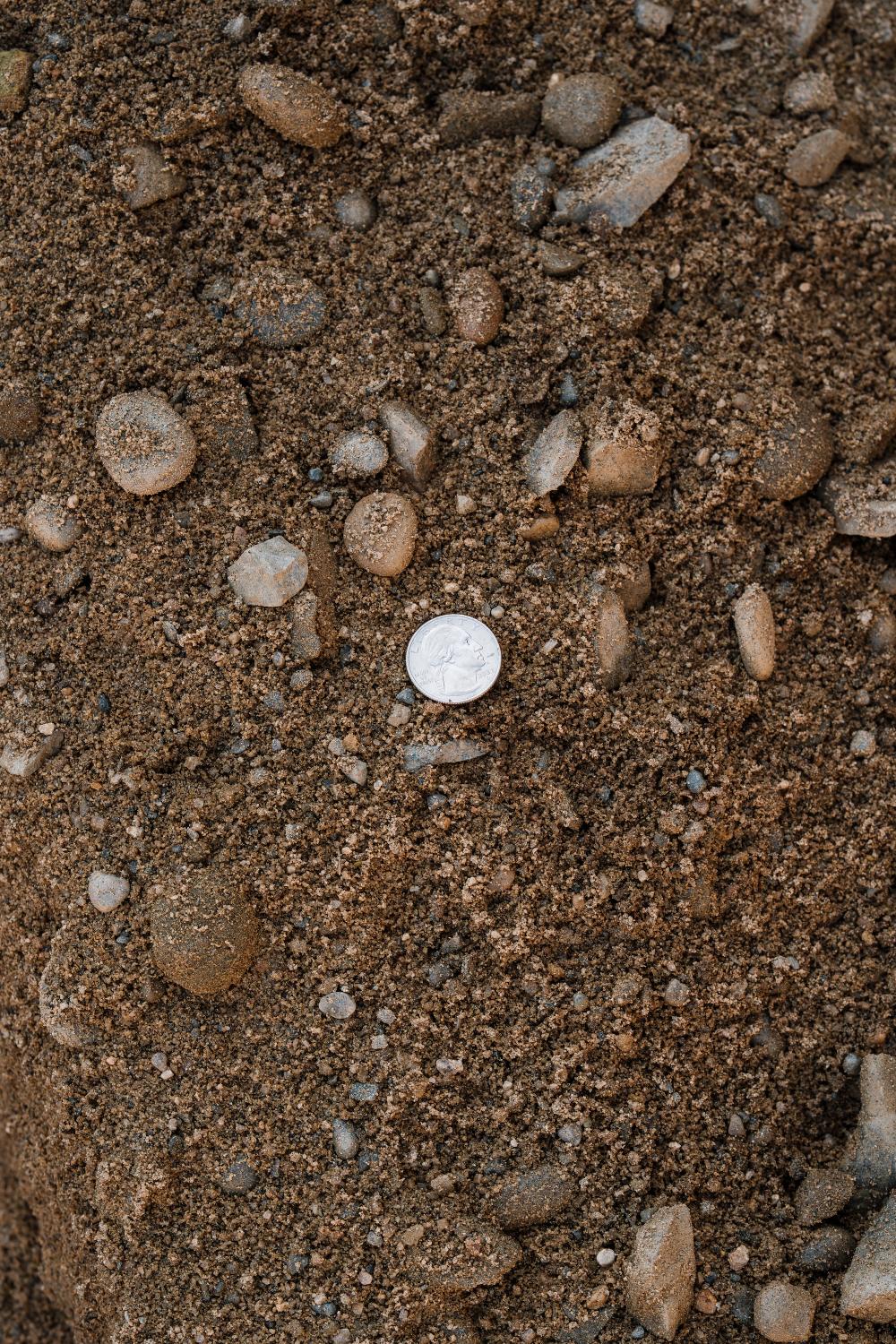
1" Concrete Mix
90 sqft per ton @ 2″ Depth
Closed
Hours:
Mon-Sat: 6:30 AM - 4:00 PM
Sunday: Closed
Why 1" Concrete Mix? Use Cases and Performance
1" concrete mix is a graded blend of aggregate, sand, and fines sized specifically for batching on-site concrete. It is not a decorative rock and it is not a base material you spread and walk away from. It is the raw aggregate component that gets combined with portland cement and water, in a mixer or a wheelbarrow, to produce structural concrete for slabs, footings, and flatwork. The name describes the top aggregate size in the blend, a nominal one inch, with the sand and smaller fractions already proportioned in.
The gradation is what makes it work as concrete. A well-graded aggregate blend, meaning a mix of large, medium, and small particle sizes down to sand, packs together with fewer voids than a single-size rock would. Fewer voids means less cement paste is needed to fill the gaps and bind the mass, which produces a stronger, less porous slab for the same cement content. Order plain 3/4" crushed rock and sand separately and try to proportion your own mix at the mixer, and you will use more cement, more water, and more guesswork to get a comparable result.
What people use 1" concrete mix for
- Footings and foundations: batched into structural concrete for fence posts, small footings, and foundation sections.
- Slabs on grade: patios, walkways, and shed or garage pads mixed on site rather than ordered as ready-mix.
- Post holes and column bases: small-volume structural pours where calling a ready-mix truck does not make sense.
- Repair patches: filling out a cracked or spalled section of existing concrete with a fresh batch that matches the aggregate size of the original pour.
- Steps and small structures: garden walls, mow strips, and other cast-in-place concrete elements built a wheelbarrow load at a time.
- Any job small enough, or remote enough, that a ready-mix truck minimum charge or access limitation makes on-site batching the practical choice.
1" mix vs 3/8" mix, why the aggregate size matters
We also stock 3/8" concrete mix, which is the same idea at a smaller top size. The 1" blend is the standard choice for general flatwork and footings where a coarser aggregate is acceptable and even preferable for strength and cement economy. The 3/8" blend is for sections too thin or too tight for a 1" stone to sit properly, such as thin toppings, tight rebar spacing, or finely detailed formwork. If you are unsure which one your project calls for, describe the slab thickness and rebar spacing when you call 559-233-6603 and we will steer you to the right one.
This is aggregate, not finished concrete
1" concrete mix does not contain cement. You add portland cement and water at the mixer in the proportions your project requires. If your job needs delivered, pumped, ready-mix concrete for a large pour, that is a different product from a ready-mix supplier, not something we batch or deliver. Call 559-233-6603 if you are not sure which category your job falls into.
Buying 1" concrete mix in Fresno
We sell 1" concrete mix by the ton from our yard at 3562 South Elm Avenue in Fresno, Monday through Saturday, 6:30 AM to 4:00 PM. Load it yourself, have us load your truck or trailer, rent a dump trailer for a self-haul, or have it delivered by dump truck for larger quantities. Pricing is quoted live at 559-233-6603 since aggregate cost moves with fuel and quarry pricing through the season.
1" Concrete Mix: Guidance for Your Situation
Pick the description that fits you best. Specs, steps, and pricing questions differ for a weekend project versus a bid or a compliance inspection.
For homeowners and DIY builders
Mixing and Pouring Your Own Concrete
Most homeowner concrete work with this material falls into three categories: a small slab or pad, a set of footings or post holes, or a patch repair. The mixing ratio and the placement steps are largely the same across all three, and getting the basics right matters more than any tool you buy for the job.
How much aggregate and cement do I need?
A common working ratio for on-site batching is roughly one part portland cement to somewhere around five to six parts of 1" concrete mix by volume, adjusted with water to a workable, non-soupy consistency. That ratio is a starting point, not a specification. For anything structural, a footing, a load-bearing slab, a foundation element, follow your project's engineering requirements or your local building department's standard mix design rather than a rule of thumb from a supply yard. We sell the aggregate; we do not certify mix designs, and any strength number for a specific application should come from your plans or a licensed professional.
| Project | Typical slab thickness | Notes |
|---|---|---|
| Garden path or stepping pad | 3"-4" | Light foot traffic only, minimal or no reinforcement typically used |
| Patio slab | 4" | A wire mesh or rebar grid is common practice, confirm with local code |
| Shed or small garage pad | 4"-6" | Thicker sections and reinforcement for point loads from stored equipment |
| Fence post footings | Varies by post spacing and soil | Depth below frost or into stable soil, follow local practice |
| Driveway apron or approach | 5"-6" | Vehicle loading calls for a thicker section and often engineered reinforcement |
Step-by-step: a small DIY slab pour
- Excavate and grade the base. Remove organics and loose soil down to firm, undisturbed ground, and set your subgrade to the depth your slab thickness requires.
- Compact the subgrade. A hand tamper or a rented plate compactor firms up the base so the slab does not settle unevenly later.
- Add a base course if your soil is soft or drains poorly. A few inches of compacted base rock under the slab reduces cracking from a shifting subgrade, a real concern over Fresno's clay soils.
- Build and set forms. Wood forms staked at the correct height and slope give you a clean edge and a controlled thickness.
- Place reinforcement if your design calls for it. Wire mesh or rebar, set on chairs so it sits mid-depth in the slab rather than on the ground.
- Batch small loads. Mix cement, 1" concrete mix, and water in a wheelbarrow or a rented mixer in batches you can place and finish before the previous batch starts to set.
- Place, screed, and float. Fill the forms, strike off the excess with a screed board, then float the surface once the bleed water disappears.
- Cure it properly. Keep the surface damp or covered for several days, especially in Fresno's heat, where fast surface drying causes shrinkage cracking and a weak surface layer.
Working around Fresno's heat and clay
Two local conditions change how a DIY pour goes here. The first is heat: concrete placed on a 100 degree August afternoon sets and dries far faster than the same mix on a mild day, which shortens your working time and increases the risk of surface cracking if you do not cure it. Pouring early in the morning and shading fresh concrete from direct sun buys you real working time. The second is clay subgrade, which expands and contracts with moisture and can crack a slab poured directly on an unprepared, unstable base. A compacted base course and attention to drainage away from the slab matter more here than in a climate with stable, sandy soil.
Do not skip the cure
In Central Valley summer heat, an uncured slab can lose surface moisture within hours of finishing. Keep it damp with a soaker hose or covered with plastic sheeting for at least three to five days. A rushed cure is the single most common cause of surface dusting and hairline cracking in homeowner pours.
How much will it cost and how do I get it home?
1" concrete mix is priced by the ton and we quote it live, call 559-233-6603. On logistics, aggregate is dense and heavy, roughly a ton and a half per cubic yard depending on moisture, so a small trailer or pickup load goes further than it looks like it should. For a single slab or a handful of footings, most homeowners can haul what they need in one or two pickup loads or a rented dump trailer. For larger pads, ask about delivery so you are not making repeat trips.
Best time of year to pour concrete in Fresno
Spring and fall give the most forgiving working conditions, with moderate temperatures that slow the set enough to finish properly. Summer pours are doable but demand earlier start times, shade, and diligent curing. Winter pours are usually fine here given how mild Fresno winters run, though a cold snap or an unusually wet stretch can slow curing and should push a pour back a few days.
For contractors, builders, and concrete crews
Bulk Ordering, Batching, and Job-Site Logistics
For crews batching concrete on site rather than calling a ready-mix truck, a consistent, well-graded aggregate supply matters as much as the cement brand. Inconsistent gradation from load to load shows up as inconsistent workability at the mixer and inconsistent finish in the slab.
Working specs and ordering
| Property | Working value / behavior |
|---|---|
| Nominal top size | 1", graded down through sand |
| Sold by | The ton (bulk); loaded at our Fresno yard or delivered |
| Composition | Blended coarse aggregate, sand, and fines proportioned for on-site batching |
| Typical use | On-site batched concrete for footings, slabs, small structural pours, and patches |
| Not included | Portland cement is not part of this product and must be added separately at the mixer |
| Related product | 3/8" concrete mix for thin sections and tight rebar spacing |
Batching and placement notes
- Order to your mix design, not a guess. Structural work should follow an engineered mix design or the governing building code's standard mix, not a rule-of-thumb ratio.
- Check moisture before you finalize water content at the mixer. Aggregate delivered after a rain or from a wet stockpile carries surface moisture that needs to be accounted for in your water-cement ratio.
- Stage material close to the pour. On a hot Valley afternoon, every extra minute of wheelbarrow travel between the pile and the forms is time your batch is losing workability.
- Prep and compact subgrade before any concrete arrives. This is true whether you are batching on site or taking ready-mix delivery, but it matters more on small pours where a callback erases the entire margin.
- Sequence multiple batches for cold joints you can control. On sections too large to place in one continuous batch run, plan your joint locations rather than letting the mixer schedule decide for you.
- Protect fresh concrete from Fresno's summer heat and wind, both of which accelerate surface drying and increase plastic shrinkage cracking risk. Evaporation retarders or fogging can help on large exposed pours.
Job-site logistics and hauling
- Yard pickup: we load trucks and trailers at 3562 South Elm Avenue, Fresno, Monday through Saturday, 6:30 AM to 4:00 PM.
- Bulk delivery: dump truck delivery across Fresno, Clovis, and the surrounding Valley for tonnage that does not make sense to haul yourself.
- Self-haul rentals: dump trailers and trucks when your fleet is committed on another job.
- Multi-material orders: 1" concrete mix alongside base rock or plaster sand on the same run is common for jobs mixing structural pours with flatwork prep. Tell us your placement sequence and we will match the delivery order.
- Access and timing: flag tight residential access, gate codes, or early-morning start requirements when you order rather than when the truck shows up.
Bulk and account pricing
We quote bulk and repeat-account pricing directly at 559-233-6603 or through our contact page rather than publishing a rate, since tonnage, haul distance, and load count all move the number, and aggregate cost shifts with fuel and quarry pricing through the year. For production concrete crews and repeat framing or foundation contractors, ask about standing pricing so you are not re-quoting on every job.
Contractor accounts
If you order regularly, see our contractor page for how accounts, staged loads, and repeat pricing work.
For property managers, HOAs, and maintenance supervisors
Repair Work and Ongoing Maintenance Programs
Concrete flatwork on managed properties, walkways, mow strips, utility pads, small equipment slabs, tends to fail in small, scattered spots rather than all at once. Budgeting for on-site batched patch and repair work with 1" concrete mix is usually cheaper and faster than calling a ready-mix truck for a handful of small spot repairs across a property.
Where this product fits a maintenance program
- Sidewalk and walkway trip-hazard repairs where a section has cracked, settled, or heaved and needs to be cut out and repoured.
- Small equipment pads for irrigation controllers, transformers, or trash enclosure footings.
- Mow strip and curb repair around common areas and parking lots.
- Fence and sign post footings across a property where posts have failed or rotted at grade.
- Patch repairs to existing flatwork where matching the original aggregate size gives a cleaner, less visually mismatched repair than a fine patching compound.
Planning repeat repair work
Properties with aging concrete infrastructure tend to generate a steady trickle of small repair tickets rather than one large project. Keeping a standing relationship with a yard that can supply small tonnage on short notice, and quote consistent pricing across the year, is usually more efficient than sourcing material job by job. We can set up standing or repeat-account pricing for HOAs and management companies handling this kind of ongoing work; call 559-233-6603 or use our contact page to set that up.
For larger common-area concrete work, such as replacing a full section of walkway or pouring a new equipment pad, coordinate delivery quantities with whoever is doing the finish work so the pour happens the same day the aggregate lands. Concrete aggregate sitting on site through a weekend in summer heat is not a hazard, but staged material takes up space and can be an obstruction on an active property.
Match the repair to the original
If the existing concrete on your property used a coarser or finer aggregate than 1" mix, matching that original aggregate size, rather than defaulting to whatever is easiest to order, gives a patch that blends in and cures at a similar rate to the surrounding slab. Bring a chipped-off sample or a photo when you call and we can help you match it.
1" Concrete Mix vs. Other Aggregate and Base Products
The comparison that matters most is not concrete mix against another decorative rock. It is concrete mix against the other aggregate products in the yard that look similar but serve a different structural purpose. Mixing these up on a job either wastes material or produces a section that does not perform the way it was supposed to.
| Product | What it is | Use it for | Do not use it for |
|---|---|---|---|
| 1" Concrete Mix | Graded aggregate and sand blend for batching concrete | On-site batched concrete: slabs, footings, patches | Base course under pavers or driveways, decorative ground cover |
| 3/8" Concrete Mix | Same idea, finer top aggregate size | Thin toppings, tight rebar spacing, fine repair work | Thick structural sections where a coarser mix is more economical |
| 3/4" Blue Base Rock | Crushed base rock, no concrete-grade sand fraction | Compacted structural base under slabs, pavers, and driveways | Batching into concrete, it is not proportioned for that |
| Plaster Sand | Fine, washed sand | Plaster, mortar, and masonry work, and a fine aggregate component in some mixes | Standalone coarse aggregate for structural concrete |
| 3/4" Crush Granite | Angular decorative and base aggregate, no fines blend for concrete | Driveways, walkways, decorative ground cover | Batching concrete, it lacks the sand fraction and gradation for it |
On-site batched concrete vs. ready-mix delivery
For small jobs, a handful of footings, a garden path, a small patch, batching your own concrete from 1" concrete mix and bagged or bulk cement is usually cheaper and more flexible than ordering a ready-mix truck, which often carries a minimum charge that makes a small pour disproportionately expensive. For large, continuous pours, a driveway, a full patio, a slab over a few hundred square feet, ready-mix from a concrete supplier is almost always the better call, since it delivers a consistent batch all at once and avoids cold joints between hand-mixed batches. We sell the aggregate for the first category. For the second, plan on a ready-mix supplier.
1" mix vs. buying bagged concrete mix from a hardware store
Bagged, pre-blended concrete mix with cement already included is convenient for very small jobs measured in a few bags, a single post footing or a small repair. Past that scale, the math flips quickly. A cubic yard of concrete is roughly forty to fifty standard bags once you account for the aggregate and cement both, and bagged material costs substantially more per unit volume than buying aggregate by the ton and cement separately. For anything beyond a small handful of bags, bulk aggregate plus bulk or palletized cement is the cheaper and less physically punishing route.
1" Concrete Mix in Central Valley Conditions
Fresno's climate and soil push a few local realities into any concrete work here that generic pouring advice, written for a milder or wetter climate, will not cover well. Long, hot, dry summers, a short and sometimes intense wet season, and clay-heavy native soil all change how a batched slab or footing should be planned, placed, and cured.
Heat and curing
Summer afternoon temperatures well over 100 degrees are routine in Fresno and Clovis from June through September. Hot weather accelerates the hydration reaction in fresh concrete, which shortens working time, increases the risk of plastic shrinkage cracking as surface moisture evaporates faster than bleed water can replace it, and demands a more disciplined curing schedule than the same pour would need in spring or fall. Pouring early in the morning, shading the fresh slab, and keeping the surface damp for several days after finishing all matter more here than they would in a mild coastal climate.
Clay and hardpan subgrade
Much of the native soil across Fresno and Clovis carries a heavy clay fraction, and some lots sit over hardpan just a foot or two down. Clay subgrade expands when it absorbs winter moisture and contracts as it dries out over summer, and that movement transmits into a slab poured directly on unprepared clay, showing up as cracking that has nothing to do with the concrete mix itself. A compacted base course, adequate slab thickness, and control joints placed at reasonable intervals all reduce this risk. Footings should bear on stable, undisturbed soil at a depth that clears the zone where seasonal moisture swings the most.
Winter rain and the short wet season
Fresno's rain is concentrated into a handful of winter months and can arrive as intense, short storms. A pour scheduled during or immediately before a storm risks surface erosion on fresh concrete and can wash fines out of an uncured slab edge. Checking the forecast and protecting a fresh pour with plastic sheeting if rain is possible within the first day or two after placement is worth the extra step, particularly on exposed flatwork without a structure overhead.
Tule fog and slow winter cure
Dense tule fog settles into the Valley on cold winter mornings and can keep temperatures low and humidity high for hours at a stretch. Cold, damp conditions slow the concrete curing reaction, which is not usually a problem for strength development given enough total time, but it does mean winter pours take longer to reach a strength where forms can come off or the surface can bear load. Build extra time into a winter schedule rather than treating cure time as a fixed number regardless of season.
Wind and dust during batching
Windy spring afternoons are common across the Valley floor, and an open stockpile of aggregate or an active mixing operation can throw dust in those conditions. Wetting a stockpile lightly before working it, and staging your batching operation with some wind protection, keeps material where it belongs and keeps the job site more pleasant for anyone nearby.
Irrigation and long-term slab performance
After a slab or footing has cured, ongoing irrigation practices nearby still matter. Sprinkler heads that spray directly onto a slab edge for years can contribute to surface staining and, over a very long timeline, accelerate freeze-thaw-style surface wear in the rare cold snaps Fresno does get, though this region's mild winters make that a minor factor compared to coastal or mountain climates. The bigger long-term issue locally is irrigation water keeping the clay subgrade at the edge of a slab consistently wetter than the center, which can contribute to differential movement and edge cracking over years. Directing sprinkler heads away from slab edges is a simple, often-overlooked fix.
Frequently Asked Questions
Have questions? We've got answers. If you don't see your question below, give us a call at (559) 233-6603.