Rip Rap in Fresno: Sizes, Uses & Erosion Control That Lasts
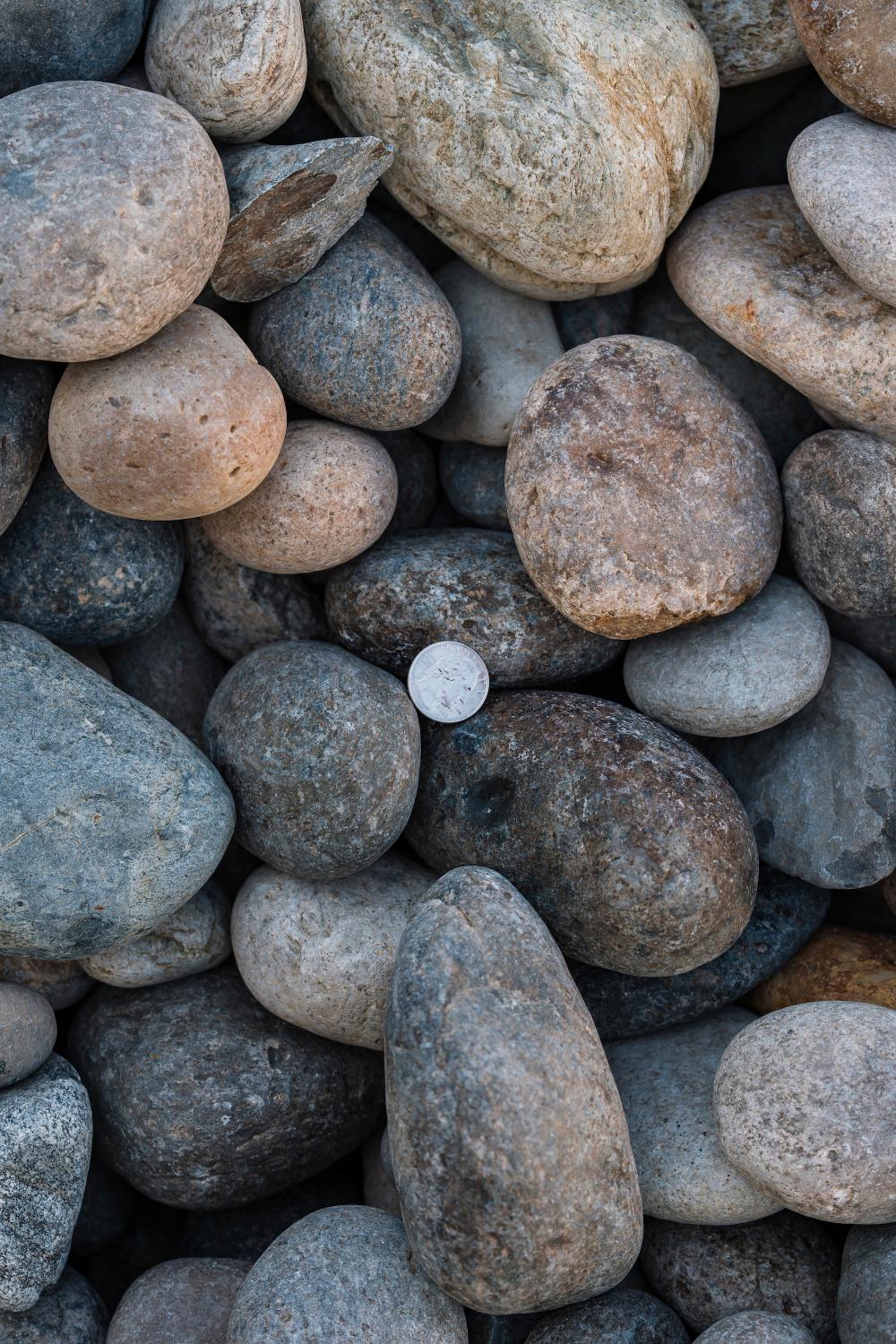
Rip rap is loose, heavy stone placed over soil to stop moving water from washing it away, used on canal and ditch banks, culvert outlets, pond edges, and slopes. American Rock and Rent supplies large stone for erosion control across Fresno and Clovis, with 4"-8" Noiyo river cobble as our largest size for residential and light commercial armoring. Here is how rip rap works, how it is sized, and how to install it so it stays put.
What Rip Rap Actually Does
Erosion is a question of force. Water moving down a channel or off a pipe outlet carries enough energy to pick up soil, and once it starts undercutting a bank, each storm takes more than the last. Rip rap does not block the water. It puts a layer of stone heavy enough to resist that force between the flow and the soil, and the gaps between the stones break up the energy instead of concentrating it the way a smooth concrete surface does.
That is why the size of the stone matters more than the quantity. Rock that is too small simply moves downstream in the first real flow event, taking your investment with it and often making the scour hole worse than before.
Where Rip Rap Is Used Around Fresno
- Canal, ditch, and creek banks. Irrigation infrastructure is everywhere in Fresno County, and bank protection at bends and structures is routine maintenance.
- Culvert and pipe outlets. An unarmored outlet digs a hole under itself. An apron of stone spreads the flow and stops the scour.
- Detention and retention basin edges. Water levels rise and fall, and bare slopes slump without stone.
- Pond and lake shorelines. Wave action erodes the waterline first; stone at that band holds the shape.
- Steep slopes and cut banks. Where planting will not establish fast enough to hold soil, stone buys the time.
- Bridge and structure abutments. Protecting the soil right around concrete is standard practice.
Rip Rap Sizes and Gradation
Rip rap is specified by size class rather than by the yard of decorative rock. Engineered projects in California typically reference a Caltrans class or a stone gradation with a median size, often written as D50, plus a required layer thickness. In broad terms:
- 4 to 8 inch stone handles residential swales, culvert outlet aprons, small ditch banks, and slope armoring where flow velocities are modest. This covers the majority of homeowner and light commercial work.
- 8 to 12 inch stone is typical for larger channels and steady flows.
- 12 inch and larger belongs to engineered channel, levee, and bridge work, where the size comes from a hydraulic calculation rather than a rule of thumb.
Two other rules hold across sizes. Angular, blocky stone interlocks better than perfectly rounded stone. And the layer needs to be at least twice as thick as the largest stone in it, because a single-stone layer is a layer that can be rolled.
What We Carry for Erosion Control
To be straight with you: we do not stock a graded, engineered rip rap product under that name. Our largest stone is 4"-8" Noiyo river cobble, and it is what we supply for erosion control on residential and light commercial jobs — outlet aprons, swale bottoms, bank edges, and slope armoring. For channel bottoms and transitions we also carry 2"-4" Noiyo river cobble and 1 x 4 river rock, and for the drainage layer under and behind stone work, 3/4" crush river rock.
If your plans call out a specific class or gradation, call us at 559-233-6603 with the spec before you order. We would rather tell you up front whether what we carry meets it than have you find out at inspection. For the wider drainage picture, our drainage rock page covers French drains, swales, and sizing.
How to Install Rip Rap So It Stays
- Shape the slope first. Stone laid on a slope steeper than about 2:1 wants to creep downhill. Lay the grade back if you can, and remove loose or saturated material rather than burying it.
- Put filter fabric down. Geotextile between soil and stone is what stops water from pulling fines out through the gaps. Skipping the fabric is the single most common reason rip rap fails — the stone stays and the soil leaves from underneath it.
- Add a bedding layer. A few inches of smaller washed rock under the large stone spreads the load and protects the fabric from being punctured during placement.
- Key in the toe and edges. Trench the bottom edge in below grade. If water can get under or around the armoring at the downstream end, it will unravel the whole run.
- Place, do not dump. Stone set so pieces bear on each other interlocks. A dumped pile has voids and high spots that flow will exploit.
- Extend past the fast water. At outlets, carry the apron beyond where the jet dissipates, and up the banks above the expected high-water line.
Rip Rap vs. Other Erosion Fixes
Stone is not always the answer. On gentle slopes with light runoff, vegetation, straw wattles, or erosion blankets are cheaper and look better. Where water is concentrated but slow, a shaped and rocked swale or dry creek bed does the job with smaller material and reads as landscaping rather than infrastructure. Retaining walls solve grade, not flow, and still need drainage behind them. Rip rap earns its cost where water is concentrated and fast, where the bank is already failing, or where you need protection that works from day one without waiting on plants to establish.
Permits and Water-Course Work
Placing rock in or along a creek, canal, or other water course is not always something you can just go do. Depending on the location, work may involve the local irrigation district, Fresno County, the City of Fresno or Clovis, or state agencies with jurisdiction over streambeds. Repairing erosion on your own property away from a water course is usually straightforward, but check before you place stone in a channel. We can supply material either way; the permitting is between you and the agency.
How Much Stone Will You Need?
Estimate the area you are covering in square feet, multiply by the layer thickness in feet, and divide by 27 for cubic yards. A 20-foot by 10-foot outlet apron with a 12-inch layer is about 7.4 cubic yards. Large stone weighs roughly 1.4 tons per yard, so plan for weight when you arrange hauling. Our material calculators will help with area math, and we will size the load with you over the phone. For delivery to a bank, ditch, or field, see our material delivery service, or haul it yourself with a rental dump trailer.
FAQ
What size rip rap do I need for a culvert outlet?
For most residential and small commercial culverts, stone in the 4 to 8 inch range placed at least 12 inches thick over filter fabric handles the flow. Larger pipes, steeper grades, and higher velocities call for bigger stone sized by calculation. Extend the apron past the point where the discharge slows down.
Does rip rap need filter fabric underneath?
Yes, in nearly every case. Without geotextile, water works through the gaps and carries soil out from under the stone until the armoring settles, shifts, and fails. Fabric plus a few inches of smaller bedding rock is the standard detail.
Do you sell rip rap in Fresno?
We do not stock a graded engineered rip rap by that name. Our largest stone is 4"-8" Noiyo river cobble, which we supply for residential and light commercial erosion control. If your project specifies a class or gradation, call 559-233-6603 with the spec and we will tell you what we can supply.
How thick should a rip rap layer be?
At least twice the diameter of the largest stone in the mix, and never a single stone thick. For 4 to 8 inch stone that means roughly 12 to 16 inches placed, over bedding rock and fabric.
Is rip rap better than a retaining wall?
They solve different problems. A retaining wall holds back grade; rip rap protects soil from moving water. On an eroding bank along a channel, stone is usually cheaper, more flexible, and easier to repair. Where you need usable flat ground gained from a slope, a wall is the right tool, and it still needs free-draining rock behind it.
Can I install rip rap myself?
Small outlet aprons and short bank repairs are within reach for a homeowner with a truck and some patience, though the stone is heavy and hand-placing it is real work. Long runs, steep slopes, and anything in a live channel are jobs for equipment and, often, an engineer.
Talk Through Your Erosion Problem
Tell us what is washing out, how fast the water moves, and how big the area is, and we will tell you honestly whether our stone is the right fit. Call American Rock and Rent at 559-233-6603 or browse our landscape materials and construction materials to plan the load.