Winter Jobsite Prep in Fresno: Materials That Keep Crews Working
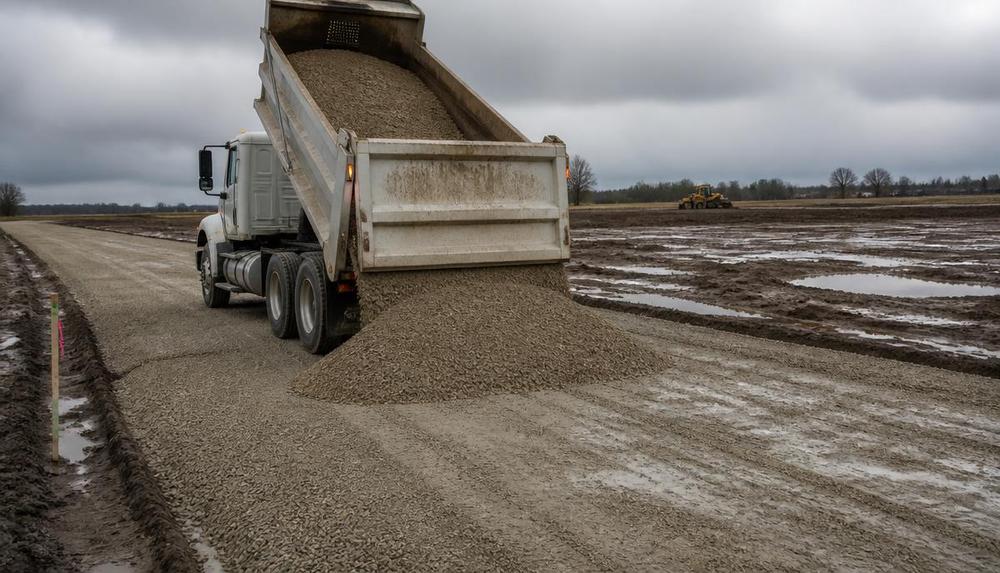
American Rock and Rent supplies base rock, crushed rock, asphalt grindings, sand, and soil to Fresno and Clovis contractors getting job sites ready for winter rain, with pickup or same-day delivery from our South Elm Avenue yard. The crews that keep working through December are the ones that hauled in material in October, and here is what they order and why.
Why Central Valley Winters Shut Job Sites Down
Fresno does not get hard freezes, so winter losses here are not about ice. They are about water and clay. Most of the valley floor sits on heavy clay soil that sheds water slowly, so a half inch of rain sits on the surface instead of soaking away. Add loaded trucks and a skid steer to saturated clay and you get ruts, pumped-up mud, and a site nobody can stage material on for days after the storm passes.
The fix is almost always the same: give traffic a firm surface to ride on, and give water somewhere to go. Both are material problems you can solve before the first storm.
1. Build the Access Road Before You Need It
Your access road is the first thing to fail and the most expensive to lose. Once a dirt approach is rutted, you are grading in mud rather than driving on rock.
- Use angular, compactable rock. 3/4" blue base rock and 3/4" crush granite lock together under traffic. Rounded gravel does not, and it disappears into soft ground within a season.
- Go deep enough. Four inches compacted handles pickups and light delivery traffic. Six to eight inches is realistic for loaded dump trucks, concrete trucks, or equipment on soft ground.
- Compact in lifts. Two 3-inch lifts, lightly watered, set up far harder than one 6-inch dump.
- Use fabric where the mud is chronic. Geotextile under the rock keeps traffic from pumping your base down into the clay.
For long rural or orchard lanes, asphalt grindings are a proven low-cost surface that tightens up under traffic and sun. Full depths and coverage numbers are in our road base and Class 2 base delivery guide.
2. Stabilize Staging, Parking, and Laydown Areas
Trucks are not the only thing that bogs down. Material stockpiles sitting on bare clay pick up mud, and a muddy laydown yard slows every task downstream. A 3 to 4 inch pad of base rock under your stockpile area, job trailer, and crew parking pays for itself in labor within a couple of rain events. Keep the pad slightly higher than the surrounding grade so runoff moves away from it instead of pooling under your material.
3. Move Water Before It Moves Your Site
Grading matters more than any product you can buy. A one to two percent fall across a pad and a slight crown down the center of a road do more than extra rock does. Beyond grading:
- Cut shallow swales to carry runoff to a street, ditch, or basin instead of letting it stand on the pad.
- Backfill trenches and utility cuts with compactable material rather than loose spoil, since loose backfill turns into a low spot that collects water.
- Keep the site draining away from foundations, footings, and any excavation you plan to work in next week.
4. Protect Bare Soil From Erosion
Rough-graded lots and fresh slopes lose soil fast in a Central Valley downpour, and that soil ends up in the street where it becomes a compliance problem. Cover exposed slopes and stockpiles before the season starts, keep a straw wattle or silt fence line at the downhill edge of disturbed ground, and stabilize the perimeter where trucks enter and exit so you are not tracking mud onto public roads. A rock entrance pad at the gate handles most tracking issues by itself.
5. Plan Cold and Wet Weather Concrete Pours
Winter concrete is workable in Fresno, it just runs on a different clock. Cooler temperatures slow the set, so expect a longer wait before you can finish the surface and before the slab takes traffic. Watch the 24-hour forecast rather than the hour you are placing, keep plastic sheeting on site in case a cell moves through, do not pour on saturated subgrade, and skip the extra water in the mix that summer pours get away with. If a cold snap will push overnight temperatures near freezing, plan on insulating blankets. Details and mix options are on our ready mix concrete page.
6. Get Material On Site Before the Rain
The week after a big storm is when everyone calls at once, and it is also when soft ground makes delivery hardest. Ordering ahead is the cheapest insurance in the trade.
- Stage road base and entrance rock in October or early November.
- Give us access details up front: gate width, turning room, and how soft the approach is.
- Ask about spreading a load along a lane rather than dropping it in one pile.
- For self-haul flexibility on your own schedule, our dump trailer rentals let a crew move a few yards without waiting for a truck.
We deliver across Fresno, Clovis, Madera, Sanger, and Selma year-round, including wet-weather and emergency deliveries when a road washes out mid-project. Contractors on account can see terms and volume options on our contractor page.
Winter Prep Checklist
- Rock the access road, 4 inches minimum, 6 to 8 inches for heavy traffic.
- Pad staging, parking, and material laydown areas.
- Crown roads and slope pads so water runs off.
- Cover and contain bare soil and stockpiles.
- Install a rock entrance pad to stop tracking.
- Book concrete around the forecast, not the calendar.
- Stockpile material before the first storm.
FAQ
When should Fresno contractors start winter jobsite prep?
October through early November. That gives you dry ground for grading and compacting base rock before the first real storms, and it means you are not competing for delivery slots during the rush after a rain event.
How thick should a temporary construction access road be?
Four inches of compacted 3/4" base rock handles pickups and light delivery traffic. Plan on six to eight inches for loaded dump trucks, concrete trucks, or equipment working on soft clay, and add geotextile fabric where the ground stays wet.
Can you deliver materials to a muddy job site?
Usually yes. Tell us how soft the approach is, where the gate is, and how much turning room a loaded truck has, and we will send the right truck or stage the load somewhere firm. Call 559-233-6603 early in the day for the best chance at same-day service.
Is it safe to pour concrete in Fresno during winter?
Yes, with planning. Cool weather slows the set rather than ruining it. Avoid pouring on saturated subgrade, keep rain off fresh concrete for the first 24 hours, allow extra time before finishing and before traffic, and protect the slab if overnight temperatures approach freezing.
What material is best for a muddy site entrance?
An angular crushed rock entrance pad, three to four inches deep and long enough for a truck to sit fully on it, knocks mud off tires before vehicles reach the street. Asphalt grindings are a durable low-cost alternative on long rural entrances.
Get Your Site Storm-Ready
Tell us what you are driving on and how much traffic it has to take, and we will help you size the load. Call American Rock and Rent at 559-233-6603 or browse our construction materials to plan your winter prep.