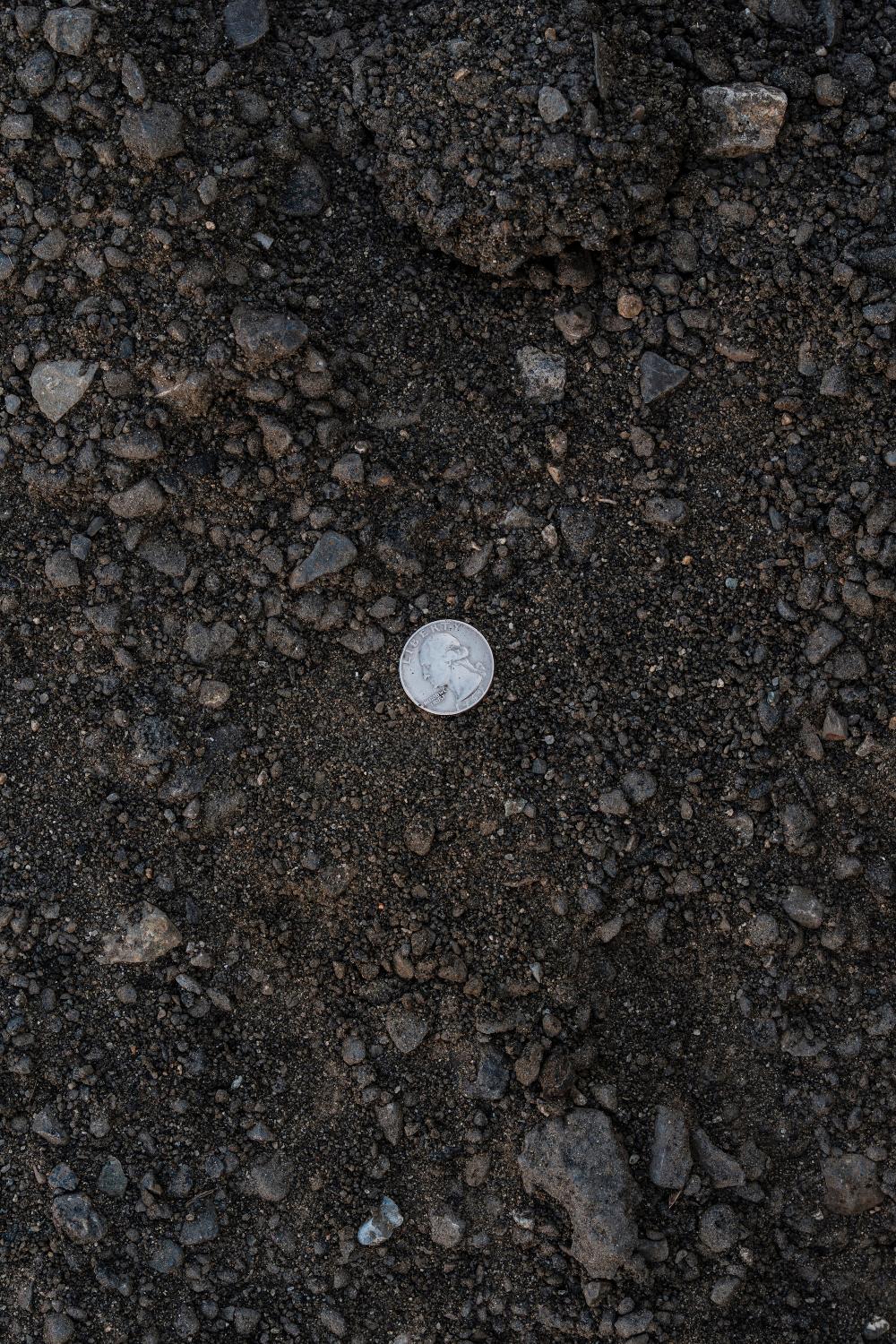
Asphalt Grindings
120 sqft per ton @ 2″ Depth
Closed
Hours:
Mon-Sat: 6:30 AM - 4:00 PM
Sunday: Closed
Why Asphalt Grindings? Use Cases and Performance
Asphalt grindings, sometimes called recycled asphalt pavement or RAP, are what is left after an old asphalt roadway or parking lot gets milled up. The milling machine chews the surface into a mix of crushed aggregate and asphalt binder, and that material gets screened and stockpiled instead of hauled to a landfill. It is not a manufactured product with a fixed recipe. It is a recycled material, and its dark, chunky, slightly tacky appearance reflects that origin.
What makes grindings useful is the residual asphalt binder still clinging to the aggregate. Spread it, grade it, and compact it under sun and traffic and that binder softens and re-knits the material into a surface that behaves a lot like a low-grade asphalt road, at a fraction of the cost of a new asphalt or concrete install. It will never match a fresh asphalt mat for smoothness or a poured slab for precision, but for the applications below, it is one of the best value plays in the yard.
Where asphalt grindings are the right call
- Rural and ranch driveways, where a firm, all-weather surface matters more than a finished look and the budget does not support paving the whole run.
- RV pads, equipment yards, and storage lots that need a compacted surface that sheds water and supports vehicle weight without the cost of asphalt or concrete.
- Temporary or interim roads on construction sites, agricultural access roads, and staging areas that need to handle truck traffic now and may get paved properly later.
- Back-of-house areas for commercial and industrial properties: dumpster pads, loading areas, and maintenance yards where appearance is a low priority.
- Patching and resurfacing existing gravel or grindings surfaces that have rutted or thinned out.
- Base material under a future asphalt overlay, where the existing grindings section can be graded and compacted as the new base rather than removed.
Where it is not the right call
Grindings are not a decorative material. The color is a flat, dark gray to black, it does not come in a clean uniform size, and it will track a faint asphalt sheen onto light-colored shoes and floors for a while after a fresh install, especially in summer heat. If you want a finished look for a front-of-house driveway or a landscape bed, 3/4" Crush Granite or 3/4" Blue Base Rock is the better fit. Grindings also are not the right choice where you need a certified, engineered base course for a structural pour. Because it is a recycled, variable material rather than a spec'd aggregate, we cannot provide gradation certificates or compaction test data for it. If your project requires an engineered, tested base course, ask about 3/4" Blue Base Rock instead and call 559-233-6603 to talk through what your project actually requires.
Not sure how much you need?
Run your square footage and depth through our material coverage calculators before you call. It saves time on the quote and helps you avoid the two most common ordering mistakes: underestimating depth and forgetting compaction loss.
Buying it in Fresno
We sell asphalt grindings by the ton out of our yard at 3562 South Elm Avenue in Fresno, Monday through Saturday, 6:30 AM to 4:00 PM. You can load your own truck or trailer, we can load it for you, we can rent you a dump trailer to self-haul, or we can deliver and dump it where you need it. Call 559-233-6603 to confirm current pricing and availability. Supply and pricing on recycled asphalt can shift with local milling projects, so we quote it live rather than publishing a number that may not hold.
Asphalt Grindings: Guidance for Your Situation
Pick the description that fits you best. Specs, steps, and pricing questions differ for a weekend project versus a bid or a compliance inspection.
For rural homeowners and property owners
Installing Asphalt Grindings on a Driveway or Pad
Most homeowner interest in grindings comes from one problem: a long gravel driveway, ranch access road, or RV pad that turns to dust in summer and mud in winter, and a paving quote that is well outside budget. Grindings sit in the middle, cheaper than asphalt or concrete, tougher and less dusty than plain gravel once they are compacted in.
How much depth do I actually need?
| Application | Recommended depth | Notes |
|---|---|---|
| Utility path or low-traffic walkway | 2" | Fine for foot traffic and occasional wheelbarrow use. |
| Ranch or driveway resurfacing over existing base | 2"-3" | Works well as a top-up over an existing gravel or grindings surface. |
| New driveway over compacted native soil | 3"-4" | A compacted base underneath extends the life of the surface significantly. |
| RV pad or equipment parking | 4" over a compacted base | Concentrated point loads from jacks and stabilizers need real structure underneath. |
Step-by-step: a DIY grindings driveway
- Strip the organics. Remove grass, weeds, and topsoil down to firm subgrade. Anything organic left underneath will decompose and cause dips later.
- Grade for water. Shape a gentle crown or slope so water sheds off the surface instead of pooling. Fresno rain is infrequent but comes hard when it comes, and standing water is what breaks down a grindings surface fastest.
- Compact the subgrade. A plate compactor or a rented roller works. Lightly wetting dry native soil first helps it compact instead of just bouncing under the machine.
- Add a base if the soil is soft or the drive carries regular vehicle traffic. A few inches of a base-rock product under grindings adds real structural life; on firm native soil for light-duty use you can often place grindings directly.
- Spread the grindings in a lift no deeper than about 3 inches at a time and rake it roughly level.
- Compact the surface. Run a plate compactor or a vibratory roller over it, ideally on a warm day when the residual asphalt binder is soft enough to knit.
- Let it cure. Traffic use is fine right away, but the surface firms up and tightens over the first few weeks as the binder sets under sun and use.
What to expect the first summer
New grindings soften slightly in Fresno's summer heat, which is normal and is exactly the process that lets the material bind together into a firmer surface over time. Expect a little bit of tackiness on very hot afternoons in the first season, less of it as the surface compacts and weathers. Avoid parking a vehicle in the same exact spot every day on a brand new install, since a soft afternoon surface under a stationary tire can leave a shallow depression before it fully sets.
The single most common DIY mistake
Skipping compaction. Grindings dumped and raked flat without being compacted stay loose, rut under tires, and never develop the bound surface that makes this material worth using over plain gravel. A day of plate compactor rental is a small cost against redoing the job.
Maintenance
- Ruts and low spots: fill with a thin layer of fresh grindings and compact. This surface is easy to patch, which is one of its advantages over asphalt.
- Weeds: a compacted grindings surface resists weeds well since there is little soil exposed, but windblown dirt sitting in low spots will still sprout weeds over time.
- Edges: grindings do not need the strict edge containment that rounded gravel does, but a defined edge keeps the surface from spreading into adjacent beds or lawn.
- Re-grading: on a long driveway, dragging or grading the surface once a year keeps the crown and drainage working as intended.
For contractors, builders, and site supervisors
Specs, Bulk Ordering, and Job-Site Logistics
Asphalt grindings move in volume for us, mostly to contractors building temporary roads, staging areas, and interim pads on active job sites, plus agricultural and rural property work. Monday through Saturday, 6:30 AM to 4:00 PM, first loads out early. Call 559-233-6603 the day before on anything over a few loads and we will have it staged and ready.
Working characteristics
| Property | Working value / behavior |
|---|---|
| Material source | Milled from existing asphalt pavement, recycled and screened |
| Sold by | The ton, at our Fresno yard or delivered |
| Composition | Crushed aggregate coated in residual asphalt binder, variable gradation |
| Typical use | Temporary and rural roads, RV and equipment pads, back-of-house surfaces, base for future paving |
| Compaction behavior | Binder softens with heat and traffic, allowing the surface to bind and firm over time |
| Certified gradation / test data | Not available. This is a recycled, variable material; call for engineered-base alternatives if your spec requires certified data |
| Coverage | Calculated at 2" depth, see our calculators for takeoffs |
Placement and compaction
- Prep the subgrade. Strip organics, proof-roll, and correct soft or saturated spots before placing material. Placing grindings over an unproofed wet section just buries a future failure.
- Place in lifts. Keep individual lifts to roughly 3 inches or less and compact each one rather than dumping full depth in one pass.
- Compact with heat in mind. Grindings compact best when the residual binder is warm and workable. On cool mornings or in winter, expect it to take a bit more compactive effort to knit tightly.
- Grade for drainage before final compaction. Once the surface locks up it is harder to reshape without milling or ripping it.
- Expect ongoing traffic to continue compacting the surface. A grindings road on an active job site typically tightens up over its first few weeks of use.
Job-site logistics and hauling
- Yard pickup: we load trucks and trailers on site at 3562 South Elm Avenue, Fresno, Mon-Sat 6:30 AM-4:00 PM.
- Delivery: dump truck delivery for bulk tonnage, including staged multi-load deliveries for larger sites.
- Self-haul: dump trailer and truck rentals when your own trucks are committed elsewhere.
- Multi-material orders: grindings plus base rock plus finish aggregate on one delivery schedule is common on staged builds. Tell us the placement sequence and we will match load order to it.
- Access: flag tight site access, low overhead lines, or gate restrictions when you place the order rather than when the truck shows up.
Bulk and account pricing
We quote bulk and repeat-account pricing directly instead of publishing a rate, since supply and cost on recycled asphalt shift with local milling and paving activity, and delivery distance and load count both affect the final number. Call 559-233-6603 or send us the job details and we will price material and freight together. For recurring site work or standing supply on a multi-phase project, ask about setting up standing pricing so field crews are not re-quoting on every draw.
Commercial and industrial applications
Grindings are a common recommendation for back-of-house commercial areas, maintenance yards, and industrial storage lots, because the cost per square foot is well below asphalt or concrete and the surface holds up to repeat vehicle and equipment traffic once compacted. It is not the material for a customer-facing parking lot or a surface that needs to look finished, but for a fenced equipment yard or a truck staging area it does the job at a fraction of the paving cost. For a front-of-house alternative with a cleaner appearance and similar load-bearing performance, see 3/4" Crush Granite.
Contractor accounts
If you buy from us regularly, see our contractor page for how accounts, staged loads, and repeat pricing work.
For property managers, farmers, and rural landowners
Roads, Pads, and Yard Surfaces on Working Property
On working agricultural and rural properties across the Central Valley, grindings show up on the surfaces that get used hard and looked at rarely: farm and orchard access roads, equipment turnarounds, well pad surrounds, and the gravel yard behind a shop building. The appeal is straightforward. It costs less than asphalt or base rock per ton in most cases, it handles heavy equipment traffic, and it can be topped up in place rather than torn out and replaced.
Farm and ranch road applications
- Orchard and field access roads that see tractors, harvesters, and delivery trucks benefit from a compacted grindings surface that holds up better than plain dirt or native gravel through irrigation season.
- Well sites and pump pads need a firm, all-weather surface for service vehicles, and grindings compact into exactly that without the cost of paving an isolated location.
- Equipment yards and shop aprons take point loads from parked implements and benefit from the same binding behavior that makes grindings useful on a driveway.
- Interim roads on land under development can use grindings now and either stay as-is for agricultural use or serve as base for future paving once the property builds out.
Property management considerations
For multifamily, storage facility, and commercial property managers, grindings are most often the right call for areas tenants do not see up close: dumpster enclosures, back gates, maintenance access, and overflow parking that is rarely full. The dark color and rougher surface read as utilitarian rather than finished, which is a mismatch for a leasing office frontage but exactly right for a maintenance yard. Keep it away from areas where tenants or customers walk in dress shoes on a hot day, since a fresh or under-compacted surface can be slightly tacky.
Dust control on rural roads
A well-compacted grindings road produces noticeably less dust than plain dirt or loose gravel because the residual binder holds fines together instead of letting them grind loose under tires. It will not eliminate dust entirely on a long dry road in August, but property owners dealing with dust complaints from neighbors along a shared access road commonly see a real improvement after resurfacing with compacted grindings.
Ordering for larger acreage
Road and pad projects on agricultural or rural property often run into the tens or low hundreds of tons rather than a few yards, and that changes the logistics conversation. Multiple dump truck loads, delivery scheduling around irrigation or harvest windows, and total tonnage estimates based on road length and width all matter more than they do on a small residential job. Call 559-233-6603 with your road dimensions, or send us the details through our contact page, and we will help size the order and work out a delivery schedule that fits your operation.
Local delivery for rural and agricultural sites
We deliver grindings throughout Fresno, Clovis, Sanger, Selma, Kingsburg, Madera, and out into surrounding agricultural areas. Call ahead on longer rural routes so we can plan load timing around your access and gate schedule.
How Asphalt Grindings Compare to the Alternatives
The real decision for most buyers is not grindings versus asphalt paving, since that comparison usually settles itself on budget alone. It is grindings versus the other aggregates in the yard that could do a similar job.
| Material | Load-bearing surface | Appearance | Best for | Trade-off vs. asphalt grindings |
|---|---|---|---|---|
| Asphalt Grindings | High once compacted and bound | Dark gray to black, rough, utilitarian | Ranch roads, RV pads, equipment yards, back-of-house areas | N/A |
| 3/4" Crush Granite | High, angular, hard, compacts and locks | Clean mid-tone gray, decorative-grade | Driveways, parking, commercial common areas, decorative ground cover | Higher cost, but a finished, front-of-house look |
| 3/4" Blue Base Rock | High, engineered aggregate base | Blue-gray, uniform | Structural base under pavers, slabs, and driveways where certified base material is required | Costs more but is a consistent, specifiable aggregate rather than a recycled material |
| 3/4" Minus Grey DG | Moderate to high, binds with fines present | Neutral gray, natural look | Pathways, patios, and driveways wanting a compacted natural-stone look | Better appearance, lower load capacity for heavy vehicle traffic |
| 38 Pea Gravel | Low | Light, rounded, decorative | Decorative beds, drainage, small paths | Not suited to vehicle traffic or road use at all |
Asphalt grindings vs. new asphalt paving
New asphalt paving delivers a smooth, uniform, dust-free surface with a predictable service life, but it comes at a materially higher installed cost and requires a paving crew and equipment. Grindings deliver a rougher, less uniform surface at a fraction of the cost, and repairs are simple: add material and compact, rather than saw-cutting and patching a paved section. For a road or pad that is functional rather than customer-facing, the cost gap usually settles the decision in favor of grindings. For a customer-facing lot or a surface that needs to look new for years, paving is the better long-term answer.
Asphalt grindings vs. plain gravel or base rock
Plain crushed base rock, without any binder, relies entirely on angularity and compaction to stay in place, and it will migrate and rut faster under repeated heavy loads than a well-compacted grindings surface, which locks together as the residual asphalt binder softens and re-sets. The trade-off is appearance and consistency: base rock is a uniform, quarried product with predictable gradation, while grindings vary load to load depending on what pavement they were milled from. For a project that needs certified, consistent material, base rock is the safer spec. For a lower-cost surface that needs to hold up to real traffic, grindings often outperform plain gravel per dollar spent.
Asphalt Grindings in Central Valley Conditions
How a recycled asphalt surface performs depends heavily on local heat, soil, and rainfall patterns, and Fresno's climate has a real effect on how grindings behave from install through the first year and beyond.
Summer heat
Fresno regularly sees surface temperatures well above 100 degrees Fahrenheit in summer, and the residual asphalt binder in grindings responds to that heat by softening. That is largely a benefit during and shortly after installation, since it lets the material knit together under compaction and traffic. The trade-off is that a freshly placed or under-compacted surface can feel slightly tacky underfoot on the hottest afternoons, and a stationary vehicle parked in the same spot day after day on a new install can leave a shallow depression before the surface fully firms up. Both effects fade as the material compacts and cures over its first season.
Clay soil and subgrade behavior
Much of the Fresno and Clovis area sits on clay-heavy soil that expands when wet and shrinks when dry, and that movement is the most common cause of dips and soft spots under any compacted surface placed directly on native ground. For driveways, RV pads, and any area that will carry regular vehicle weight, prepping and compacting the subgrade, and adding a base course on soft or clay-heavy sites, extends the life of a grindings surface considerably compared to placing it straight on unprepared soil.
Winter rain and drainage
Fresno's rainfall is concentrated into a handful of winter storms rather than steady year-round moisture, so the design priority is getting water off the surface quickly rather than managing constant dampness. A compacted grindings surface graded with a slight crown or cross-slope sheds water well. Standing water left to sit on a grindings road or pad will eventually soften the surface and accelerate rutting, so a defined drainage path away from the surface matters more here than in a wetter climate.
Dust and air quality
The San Joaquin Valley has genuine air-quality constraints, and dust from unpaved roads and yards is part of that picture. A properly compacted grindings surface generates noticeably less airborne dust than loose gravel or bare dirt because the binder holds fine particles together rather than letting traffic grind them loose. Keeping vehicle speeds moderate on long grindings roads and re-compacting worn sections both help keep dust down further.
Irrigation and wind
Where a grindings surface sits near irrigated landscape or ag ground, sprinkler overspray and windblown dirt from adjacent fields can settle onto the surface, and over time that buildup can support weed growth in low spots or worn areas. Periodic re-grading or a light top-up of fresh material handles it. Because grindings are dark, they show accumulated dust less than a light-colored aggregate would, which is a minor practical upside in a dusty environment.
Local delivery area
We deliver asphalt grindings throughout Fresno, Clovis, Sanger, Selma, Kingsburg, Madera, and the surrounding Central Valley, including rural and agricultural routes. Call 559-233-6603 to confirm delivery to your site, or rent a trailer and haul it yourself.
Asphalt Grindings: Frequently Asked Questions
Have questions? We've got answers. If you don't see your question below, give us a call at (559) 233-6603.