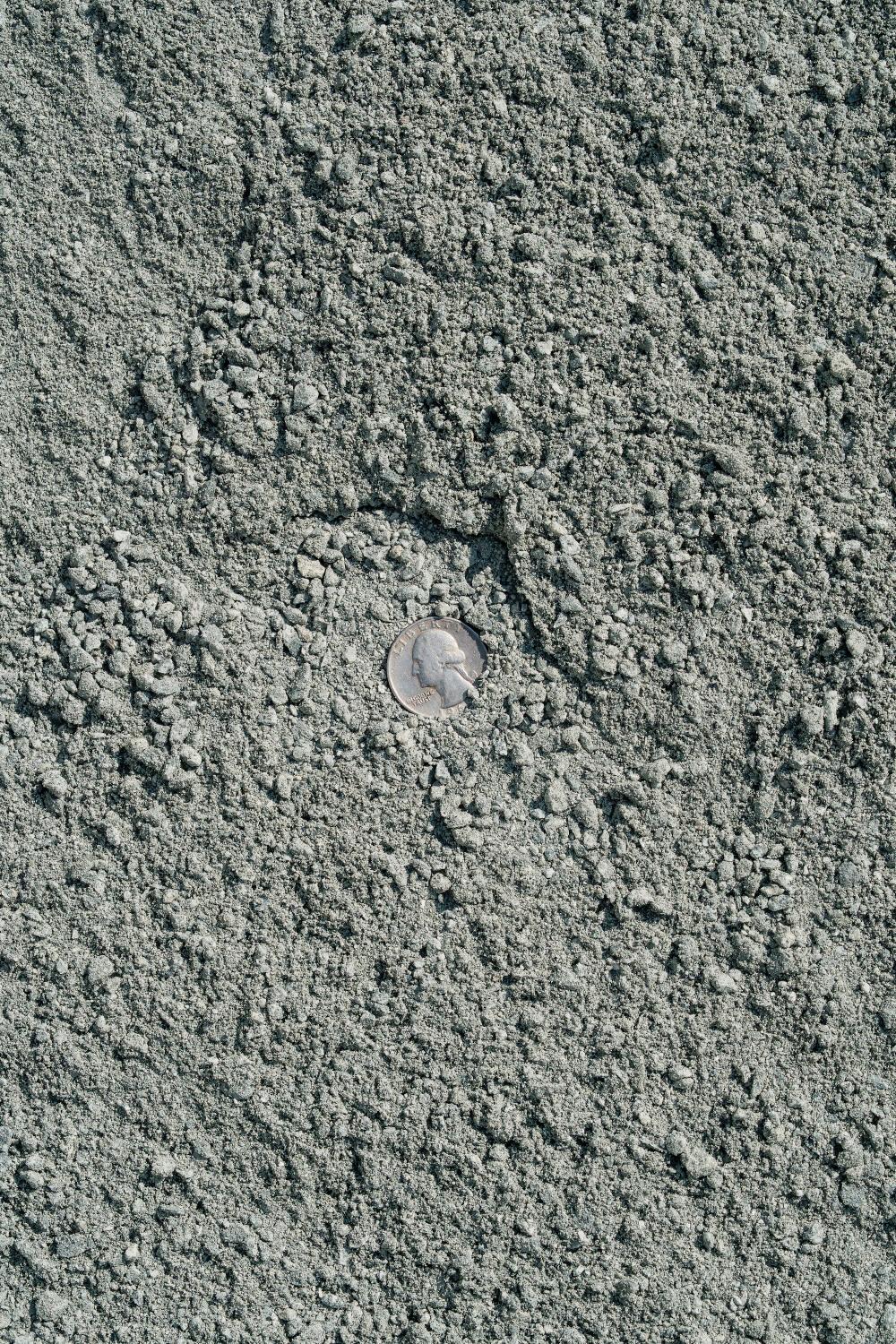
3/4" Minus Grey DG
120 sqft per ton @ 2″ Depth
Closed
Hours:
Mon-Sat: 6:30 AM - 4:00 PM
Sunday: Closed
Why 3/4" Minus Grey DG? Use Cases and Performance
3/4" Minus Grey DG is decomposed granite that has not been screened down to a single size. The "minus" means the product contains everything from 3/4" pieces down through fine granite sand and dust, all in one pile. That full range of particle sizes is the whole point. The fines fill the gaps between the larger pieces, and once the material is compacted, it locks into a firm, relatively smooth surface instead of behaving like a loose pile of gravel. It is the closest thing in the yard to a natural, walkable, driveable pathway surface.
Straight crushed granite products such as 3/4" Crush Granite are screened to a fairly narrow size band, so they stay loose and shift underfoot even after compaction. A minus product does the opposite: the graded mix of sizes packs tight, sheds water off the surface once it sets up, and resists rutting under regular foot and light vehicle traffic. That is why decomposed granite is the standard material for pathways, patios, dog runs, and rustic driveways across California, and why Fresno-area landscapers reach for it whenever a client wants a natural, unpaved surface that still feels solid to walk on.
Where 3/4" Minus Grey DG is the right call
- Garden paths and walkways where you want a firm, natural-looking surface that compacts into something close to a hard trail rather than loose gravel.
- Patios and courtyards, especially in a rustic, Mediterranean, or drought-tolerant landscape design where poured concrete would look out of place.
- Dog runs and side yards, since it compacts flatter and cleaner than loose rock and does not track into the house the way loose gravel does.
- Low-traffic rustic driveways and parking pads on a property that wants a natural look rather than a paved one, understanding the trade-offs against a true base-rock driveway.
- Between pavers or flagstone as a jointing and leveling material, where the fines help lock adjacent stones in place.
- Erosion control and general grading fill on slopes and disturbed areas where a compactable, well-graded material is useful.
Where it is not the right call
If your project is a driveway or parking area that sees regular vehicle traffic, especially in wet weather, a proper base-rock section topped with a coarser crushed product like 3/4" Crush Granite or 3/4" Blue Base Rock will hold up better long term. DG surfaces can soften and rut under sustained heavy loading, particularly if the base was not compacted correctly or the site holds water. If you want a purely decorative bed cover with no walking traffic and the lowest possible maintenance, a screened decorative rock may suit the design better since DG can shed a small amount of dust as it settles in. For a finer, more polished DG look with a warmer tone, see 3/8" Minus California Gold DG.
Not sure how much you need?
Run your square footage and depth through our material coverage calculators before you call. It speeds up the quote conversation and heads off the two most common ordering mistakes: under-ordering on depth and forgetting compaction loss.
Buying it in Fresno
We sell 3/4" Minus Grey DG by the ton out of our yard at 3562 South Elm Avenue in Fresno. You can load it yourself, we can load your truck or trailer, we can rent you a dump trailer to self-haul, or we can deliver and dump it where you want it. Call 559-233-6603 to confirm current pricing and availability. Aggregate pricing moves with fuel and quarry costs, so we quote it live rather than publishing a number that goes stale.
3/4" Minus Grey DG: Guidance for Your Situation
Pick the description that fits you best. Specs, steps, and pricing questions differ for a weekend project versus a bid or a compliance inspection.
For homeowners and designers
Installing and Designing With Grey DG
A DG path or patio is one of the more forgiving DIY hardscape projects, but it rewards patience during compaction more than any other step. Rushing the compaction phase is the single reason a DG project ends up loose and dusty instead of firm and walkable.
How much depth do I actually need?
| Application | Recommended depth | Notes |
|---|---|---|
| Garden path (foot traffic only) | 2"-3" | Compact in one or two passes, water and re-compact. |
| Patio or courtyard | 3" | Consider a stabilized DG additive if you want a firmer, more permanent surface. |
| Dog run | 2"-3" | Compacts flatter and cleaner than loose gravel, easier to hose down. |
| Jointing between flagstone or pavers | 1"-2" in joints | Sweep in, water, and compact between stones. |
| Rustic driveway or parking pad | 3"-4" over a compacted base | Base course is not optional, see below. |
Step-by-step: a DIY DG path or patio
- Strip the organics. Remove grass, weeds, and topsoil down to firm subgrade. Roots and organic matter decompose and settle, which shows up later as dips and low spots.
- Grade for water. Build in a gentle slope away from structures, roughly a quarter inch of fall per foot. DG that sits in standing water softens and gets soupy.
- Compact the subgrade. Rent a plate compactor. A light pass on the bare subgrade before you add material gives the whole section a firmer starting point.
- Set your edges. Steel edging, concrete curb, or timber keeps the material from spreading into lawn or beds. DG without edging migrates faster than crushed rock because the fines wash more readily.
- Spread the DG in lifts. Two 1.5" lifts compact better than one 3" dump. Rake it level as you go.
- Wet and compact each lift. This is the step people skip. Mist the material until it is damp but not muddy, then run the plate compactor over it. The fines need moisture to bind to the larger pieces.
- Repeat for the top lift, and do a final light watering. A well-compacted DG surface should feel firm underfoot within a day, not loose.
- Consider a stabilizer for patios. For a patio or high-traffic path, a polymer stabilizer product mixed into the top lift produces a harder, more permanent surface that resists rutting from chair legs and grill carts. Ask us about local suppliers if that is the finish you want.
Design: what grey DG looks like in a Fresno yard
Grey DG reads as a warm, dusty tan-gray with fine speckling, closer to natural soil in tone than a quarried decorative rock. It is the material most often chosen when the goal is a landscape that looks like it belongs in the Central Valley rather than an imported look.
- Against native and drought-tolerant plantings such as California natives, olive trees, and ornamental grasses, DG reads as ground rather than as a hardscape feature, which keeps the plants as the visual focus.
- As a patio surface under a pergola or dining set, the compacted texture is comfortable for chairs and bare feet in a way that crushed granite is not.
- As a path material winding through a yard, curves read more naturally in DG than in a rigid material like pavers, and it is far cheaper to install over a long run.
- Paired with flagstone stepping pads, DG in the joints and surrounding field gives a finished, intentional look without full hardscape cost.
- As a driveway or parking apron, DG gives a rustic, ranch-style look that reads very differently from crushed granite or base rock, though it needs more upkeep under regular vehicle traffic.
What DIY installs typically cost
Aggregate is priced by the ton and moves with market conditions, so call 559-233-6603 for a live number. Budget separately for edging material, a plate compactor rental for the day, and either a delivery fee or a dump trailer rental. For most homeowners doing a path or small patio, one to two tons covers a meaningful area, and self-hauling in a rented dump trailer is usually the cheapest way to get it home.
The single most common DIY mistake
Spreading DG dry and skipping compaction. Dry DG that is only raked flat looks fine on install day and then walks apart within weeks. Water it in and compact it in lifts, and it holds.
Maintenance
- Weeds: DG does not feed weeds on its own, but windblown dirt and seed settle into the surface over time. A pre-emergent applied in spring and fall handles most of it.
- Dust: a light watering during dry, windy stretches keeps loose fines from lifting. This is more of a factor with DG than with washed crushed rock, since the fines are part of the product by design.
- Ruts and low spots: fill with fresh material, water, and re-compact rather than letting a soft spot widen with each rain.
- Top-dressing: expect a light top-dress on a path or patio every few years, more often on a driveway carrying regular vehicle traffic.
For contractors, landscapers, and property managers
Specs, Bulk Ordering, and Job-Site Logistics
DG is a steady mover for path, patio, and hardscape crews around Fresno and Clovis, and it is also one of the more spec-sensitive products in the yard because the fines content matters as much as the top size. Mon-Sat, 6:30 AM to 4:00 PM, first load out the gate early. Call 559-233-6603 the day before on anything over a few tons and we will have it staged.
Working specs
| Property | Working value / behavior |
|---|---|
| Nominal size | 3/4" minus, full graded range down to fines |
| Sold by | The ton (bulk); loaded at our Fresno yard or delivered |
| Composition | Crushed granite with natural fines retained, not washed |
| Typical use | Paths, patios, dog runs, rustic driveways, jointing, erosion control fill |
| Compaction | Place in lifts, water to near optimum moisture, and compact each lift |
| Drainage | Sheds surface water once compacted; not a free-draining clean aggregate |
| Coverage | Calculated at 2" depth, see our calculators for takeoffs |
Placement and compaction
- Prep the subgrade. Strip organics, proof-roll, and correct soft spots. Fresno-area clay subgrade holds moisture and pumps under load if DG is placed over a wet, unproofed section.
- Place a base course for anything carrying vehicles. DG on its own is a wearing surface, not a structural base; for driveways and parking, place a compacted base-rock section first.
- Build lifts. Place in lifts on the order of 1.5"-2" compacted rather than one deep lift, since the fines need to work into the voids of each layer to bind properly.
- Manage moisture carefully. DG compacts best damp, not dry and not saturated. A water truck or hose pass ahead of the roller or plate compactor makes a measurable difference in surface hardness.
- Add edge restraint on every project. DG's fine fraction migrates faster under wind and water than a coarser crushed product, so containment matters even more here.
- Consider a stabilizer additive for high-traffic commercial paths and patios. It reduces long-term rutting and dust generation at the cost of a less fully natural feel.
Job-site logistics and hauling
- Yard pickup: we load trucks and trailers on site at 3562 South Elm Avenue, Fresno, Mon-Sat 6:30 AM-4:00 PM.
- Delivery: dump truck delivery for bulk quantities, including staged multi-load deliveries on larger jobs.
- Self-haul: dump trailer and truck rentals when your own equipment is committed on another site.
- Multi-material orders: DG plus base rock plus edging materials on the same delivery run is normal. Bundle it and we will sequence the loads to match your placement order.
- Access: tell us about tight residential access, low lines, or gated HOA entries when you order, not when the truck arrives.
Bulk and account pricing
We quote bulk and repeat-account pricing directly rather than publishing rates, because aggregate cost moves with fuel and quarry pricing and because volume, haul distance, and load count all change the number. Call 559-233-6603 or send us the job details and we will price the material and the freight together. If you are bidding recurring work, such as HOA path maintenance or production landscape installs, ask about standing pricing so you are not re-quoting on every draw.
Commercial and HOA applications
DG shows up often in HOA common-area paths, park and trail projects, and multifamily courtyard work because it reads as a natural, low-cost surface that still holds a firm walking line when compacted correctly. The recurring complaint we hear from property managers is dust and softening after irrigation overspray, and both usually trace back to under-compaction at install rather than the material itself. For heavier-use commercial paths, ask about a stabilized DG mix or budget for a periodic top-dress and re-compaction cycle.
Contractor accounts
If you buy from us regularly, see our contractor page for how accounts, staged loads, and repeat pricing work.
For landscape designers and hardscape specialists
Design Details and Natural-Surface Hardscaping
DG occupies a specific niche in landscape design work: it is the material that lets a hardscape feature exist without looking like hardscape. Clients who want a path, courtyard, or seating area but do not want the formality of pavers or concrete are the core audience, and getting the compaction and containment details right is what separates a DG installation that photographs well for five years from one that needs constant patching.
Stabilized vs. unstabilized DG
Unstabilized DG, properly compacted, works well for garden paths, low-traffic patios, and residential dog runs. For commercial patios, dining areas with regular furniture movement, or any surface a wheelchair or stroller needs to cross reliably, a polymer-stabilized DG mix is worth the added step. Stabilizers bind the fines permanently rather than relying on moisture and mechanical compaction alone, which cuts down on rutting, dust, and the need for periodic re-compaction. We do not stock a pre-stabilized product, so if that is the spec, plan to mix in a stabilizing admixture on site or through your supplier and call us for the raw DG tonnage.
Working with curves and organic layouts
DG is one of the easiest materials in the yard to lay out in a curving, informal path because it has no joints, panels, or module sizes to plan around. Steel edging bends to any radius, and the material itself settles into whatever shape the edging defines. This makes it a strong pairing with naturalistic and native plant designs where a straight paver line would look out of place against loose, irregular plantings.
Color and blending with hardscape and structures
- Grey DG pairs cleanly with concrete, natural stone, and most stucco tones without fighting for attention, which is why it shows up so often as the connective material between a patio slab and a planted bed.
- Against flagstone, DG in the joints reads as a continuation of the stone rather than a separate material, especially when the flagstone itself has grey or tan tones.
- In a fully native or Mediterranean planting scheme, DG paths tie the whole design together visually in a way that bright decorative rock can compete with rather than support.
When to recommend an alternative
If a client wants zero maintenance and no risk of dust, a screened decorative rock over weed fabric is the lower-maintenance answer, even though it lacks the walkable, compacted feel of DG. If the surface needs to handle daily vehicle traffic, steer the design toward a base-rock and 3/4" Crush Granite section instead, and reserve DG for the pedestrian areas of the same project. Mixing materials by function, DG for paths and seating, crushed rock or base rock for drives, is a common and effective approach on Fresno-area properties.
Sampling before a full spec
Grey DG color and fines content can vary slightly by quarry run. For design-sensitive commercial or high-end residential work, pick up a sample bag or ask us to set aside a scoop before you finalize a large order.
How 3/4" Minus Grey DG Compares to the Alternatives
The useful comparison for DG is not against other decorative rock colors, it is against the other compactable surfaces in the yard, since the choice usually comes down to how the surface needs to perform once it is walked or driven on.
| Material | Surface feel | Best for | Trade-off vs. Grey DG |
|---|---|---|---|
| 3/4" Minus Grey DG | Firm, smooth, natural once compacted | Paths, patios, dog runs, rustic driveways, jointing | N/A |
| 3/4" Crush Granite | Loose, angular, does not bind into a smooth surface | Driveways, parking, commercial areas needing hard-wearing coarse rock | Better under sustained vehicle loading, less comfortable and less natural underfoot |
| 3/8" Minus California Gold DG | Firm, smooth, finer texture, warmer color | Patios and paths where a warmer gold tone fits the design | Finer and slightly softer surface, similar performance otherwise |
| 3/4" Blue Base Rock | Very firm once compacted, coarse and functional | Structural base under pavers, slabs, driveways | Not a decorative finish, the layer that goes under DG in high-traffic builds |
| 3/8" Pea Gravel | Loose, rolls underfoot | Decorative beds, drainage, small accent areas | Does not compact into a walkable surface the way DG does |
3/4" Minus Grey DG vs. 3/4" Crush Granite, which one do I need?
These two are often confused because they come from the same parent rock and sit next to each other in the yard. The difference is what has been left in the pile.
| Question | 3/4" Minus Grey DG | 3/4" Crush Granite |
|---|---|---|
| Contains fines and dust? | Yes, by design, that is what lets it compact smooth | Minimal, screened to a narrower size band |
| Compacts into a firm, smooth surface? | Yes | Compacts but stays visibly rocky and loose on the surface |
| Best for walking barefoot or bare paws? | Yes, once compacted | No, angular pieces are sharp underfoot |
| Best for daily vehicle traffic? | Only for light, occasional loading | Yes, over a compacted base |
| Sheds surface water freely? | Less so, surface is tighter once compacted | Yes, free-draining as a clean aggregate |
Decomposed granite vs. concrete or pavers for a path or patio
DG installs at a fraction of the cost of a poured concrete or paver patio of the same size and can be laid by hand without concrete trucks, forms, or curing time. It is also permeable, so it does not add to stormwater runoff, and repairs are simple: a rake, some fresh material, and a compactor pass instead of a saw cut and a patch. What it gives up is the hard, perfectly flat, wheelchair-and-furniture-friendly surface of a hardscape, along with a small amount of ongoing maintenance that a sealed paver or slab surface does not need. Many Fresno-area yards blend the two, a concrete or paver patio for the dining and cooking zone, DG for the paths connecting it to the rest of the yard.
Grey DG in Central Valley Conditions
Decomposed granite is a locally proven material in the Central Valley, but how well it performs still depends on getting the installation details right for Fresno's specific soil and weather patterns. Here is what our clay soil, dry summers, and short winter storm season mean for DG specifically.
Summer heat
Grey DG's mid-tone color absorbs less heat than a dark decorative rock, but any compacted surface in full Fresno sun gets warm by midday in July and August. Keep bare feet and paws in mind for large uncovered DG patios and dog runs, and consider a shade structure or tree canopy over seating areas. The bigger heat-related issue is drying out during compaction and cure: on a 100-degree install day, DG dries and loses its bond faster, so plan to water it in and work in the morning if you can.
Clay soil and subgrade behavior
Much of the Fresno-Clovis area sits on soils with a significant clay fraction that expands when wet and shrinks when dry. A DG path or patio placed directly on unprepared clay will telegraph that movement as cracking or unevenness over a season or two. Stripping organics, proof-rolling, and compacting the subgrade before placing DG is the step that prevents this, and for driveways or heavier-use patios, a compacted base-rock section underneath the DG wearing course adds real insurance against clay movement.
Winter storms and drainage
Fresno gets most of its annual rain in a handful of concentrated winter storms rather than steady drizzle, and a well-compacted DG surface sheds that water off the top reasonably well. The failure mode to watch for is standing water: DG that sits saturated for days, either from poor grading or a low spot that never drains, will soften and rut. Grade DG surfaces with a gentle slope away from structures and toward a defined drainage path, and avoid placing DG in a location that already collects water after a storm.
Tule fog and moisture cycling
Winter tule fog keeps DG surfaces damp for extended periods without much actual rainfall, which is generally a mild positive for a compacted DG surface since consistent light moisture helps the fines stay bound. The one thing to watch is foot traffic on a freshly installed or freshly top-dressed surface during a wet fog stretch, since the top layer can be softer than it looks until it has had time to firm back up.
Irrigation overspray and dust
Sprinkler heads aimed onto a DG path or patio are one of the more common sources of long-term problems, since repeated wetting and drying at the same spot erodes a channel or softens the surface unevenly. Adjust irrigation heads so they water plantings rather than the DG itself. On the dust side, a properly compacted DG surface generates less loose dust than people expect; most dust complaints trace back to a surface that was never fully compacted or watered in during installation, not to the material itself.
Wind
Valley wind events can lift loose fines off a freshly placed, uncompacted DG surface before it has had a chance to set up. This is another reason to water and compact in lifts rather than dumping and raking a full-depth layer and calling it finished. Once compacted, a DG surface is far more wind-resistant than it was as loose material.
Local delivery area
We deliver Grey DG throughout Fresno, Clovis, Sanger, Selma, Kingsburg, Madera, and the surrounding Central Valley. Call 559-233-6603 to confirm delivery to your address, or rent a trailer and haul it yourself.
3/4" Minus Grey DG: Frequently Asked Questions
Have questions? We've got answers. If you don't see your question below, give us a call at (559) 233-6603.